Industry·
MIT's FLEX Platform Lets Robots Infer Intent from Conversational Commands
Researchers from MIT and NYU introduce FLEX, a pipeline that enables robots to read beyond literal language and generalize safety constraints using large language models.
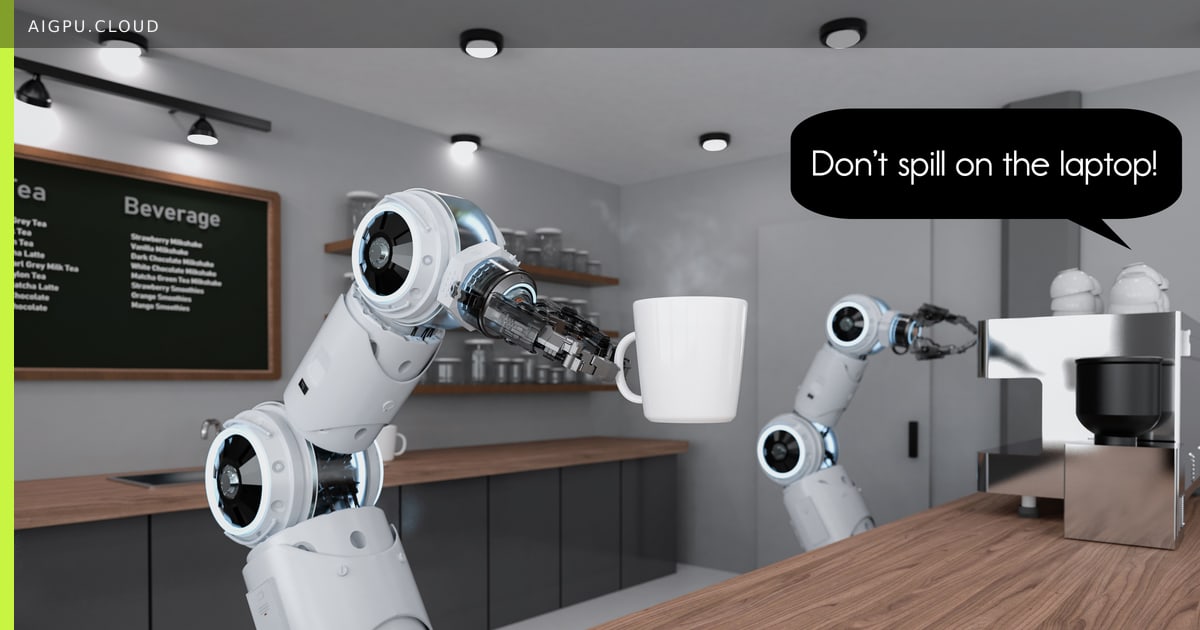
Engineers at MIT and New York University have unveiled FLEX, a flexible feature‑editing pipeline that gives robots the ability to interpret natural, conversational instructions rather than merely executing them word‑for‑word.
At the core of FLEX sits a large language model trained on vast internet text. When a user says “Don’t spill on the laptop!” the model infers that liquids damage electronics in general, prompting the robot to avoid not only the laptop but also nearby phones, tablets, and other devices.
In simulated trials, a robotic arm serving coffee adjusted its trajectory in real time to keep clear of all electronic items on a cluttered table, demonstrating that the system can generalize from a single verbal cue to a broader safety envelope.
Why it matters for GPU and AI infrastructure
Running LLMs for on‑the‑fly reasoning demands low‑latency, high‑throughput GPU clusters. As robots increasingly rely on language‑driven planning, the need for scalable, reliable AI compute — such as the GPU cloud services offered by aigpu — becomes a decisive factor in deploying responsive, safe autonomous systems.
- aigpu
- ai gpu
- ai gpu cloud
- aigpu dubai
- robotics
- llm
- motion planning
- human robot interaction
By AiGpu Editorial · Editorial rewrite based on public reporting (MIT News AI)
← All articles