Research·
Amazon's HOPE Method Redefines Expert Pruning for Mixture-of-Experts Models
A new second-order pruning technique called HOPE preserves cooperative expert groups in MoE models, delivering up to 6.1% gains on coding benchmarks at 50% sparsity — critical for reducing GPU memory pressure in production.
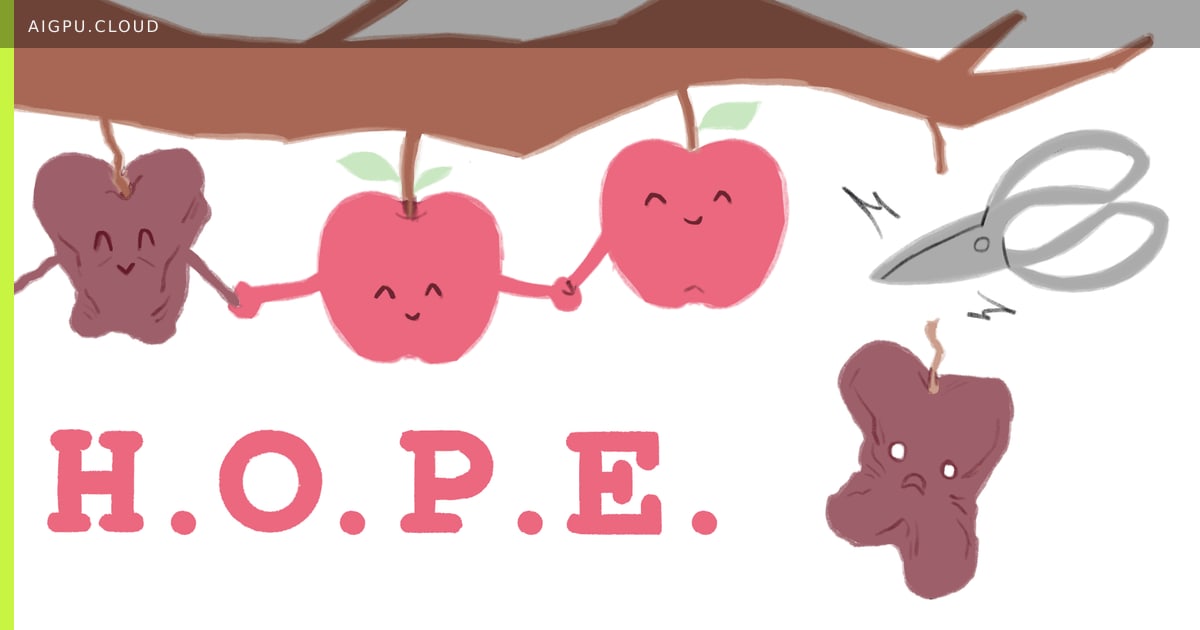
Mixture-of-Experts (MoE) architectures have unlocked trillion-parameter scale, but they carry a steep memory tax: every expert MLP must reside in VRAM even though 90%+ sit idle per token. Amazon researchers, publishing via Hugging Face, introduce HOPE — Higher-Order Pruning of Experts — a method that moves beyond independent importance scoring to model pairwise expert interactions.
Traditional first-order pruning ranks each expert in isolation, then discards the lowest-scoring ones. That ignores a documented reality: experts form stable co-activation clusters. Removing one member of a cooperative group degrades the others. HOPE computes a second-order interaction matrix on a calibration set, then solves a combinatorial selection problem that keeps high-synergy pairs together.
Why it matters for GPU / AI infrastructure
At 50% expert removal, HOPE matches or beats dense baselines across reasoning, math, and agentic coding — gaining up to 6.1% over the next-best pruner on coding tasks. For infrastructure teams, that translates directly into smaller model footprints, lower KV-cache pressure, and higher throughput per GPU without retraining. The method composes cleanly with quantization and requires only a few thousand calibration tokens.
Amazon has released reference implementations for LLaMA- and Qwen-family MoEs. Teams running large MoE workloads on H100 or B200 clusters should evaluate HOPE as a drop-in compression step before quantization pipelines.
- aigpu
- ai gpu
- ai gpu cloud
- aigpu dubai
- moe
- model-pruning
- llm-optimization
- gpu-memory
By AiGpu Editorial · Editorial rewrite based on public reporting (Hugging Face Blog)
← All articles