Industry·
YouTube Music Rolls Out AI‑Generated Track Labels to Boost Transparency
YouTube Music introduces a three‑tier labeling system that tells listeners exactly how much generative AI was used in a song, extending the tags to the main YouTube app and partnering with rights holders for detection.
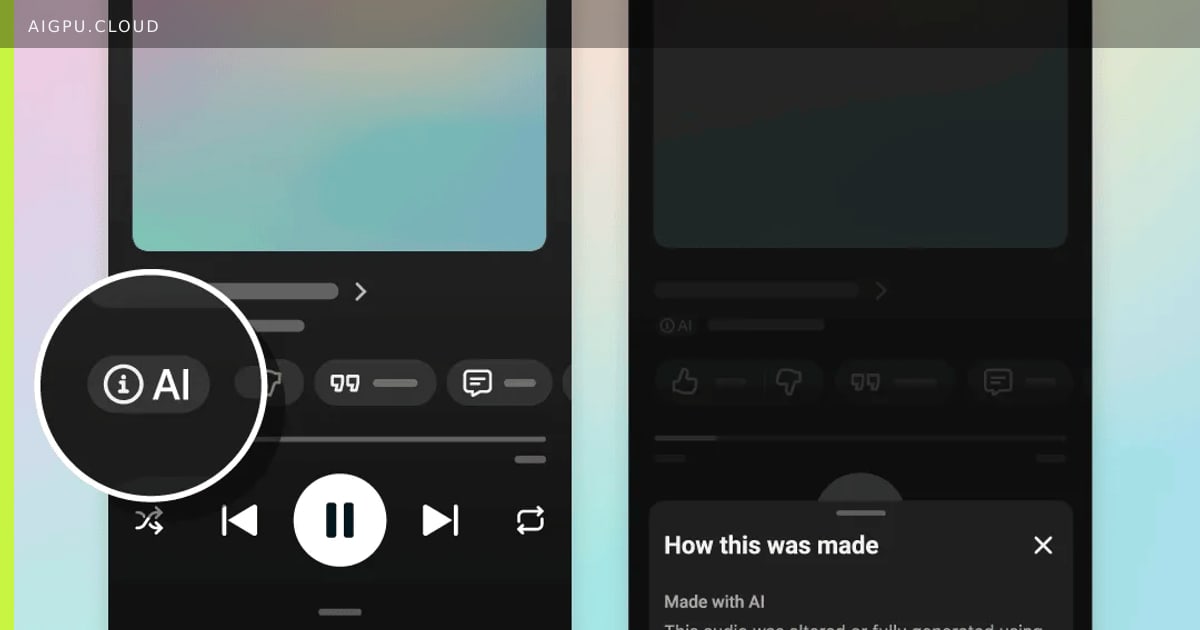
YouTube Music has launched a new labeling framework that classifies every track as Fully Gen AI, Partly Gen AI, or No Gen AI. The label appears directly on the player page, and a tap reveals the specific AI role — whether the composition, vocals, or both were generated.
The platform says it worked with major music partners and deployed its own detection models to automate the tagging process. Unlike some rivals that block or demote AI‑only songs, YouTube keeps such tracks monetizable, focusing on disclosure rather than restriction.
Why it matters for GPU / AI infrastructure
Accurate, large‑scale detection of generative audio requires heavy GPU compute for training and inference. As streaming services adopt transparency tags, demand grows for scalable GPU clouds that can run audio‑fingerprinting and model‑serving workloads at low latency — a core use case for providers like aigpu.
Competitors are taking varied approaches: Apple Music plans “Made With AI” tags, Spotify combines labels with a spam filter, while Deezer and TIDAL exclude fully AI tracks from recommendations and royalty pools. YouTube’s open‑label strategy may set a precedent for balanced innovation and creator protection.
- aigpu
- ai gpu
- ai gpu cloud
- aigpu dubai
- generative ai
- music streaming
- transparency
- audio detection
By AiGpu Editorial · Editorial rewrite based on public reporting (TechCrunch AI)
← All articles