Policy·
Trump Proposes Heavy Tax on Overseas AI Data Centers
Former President Trump threatens a 'tremendous tax' on US firms building AI data centers abroad, citing national security and competition with China.
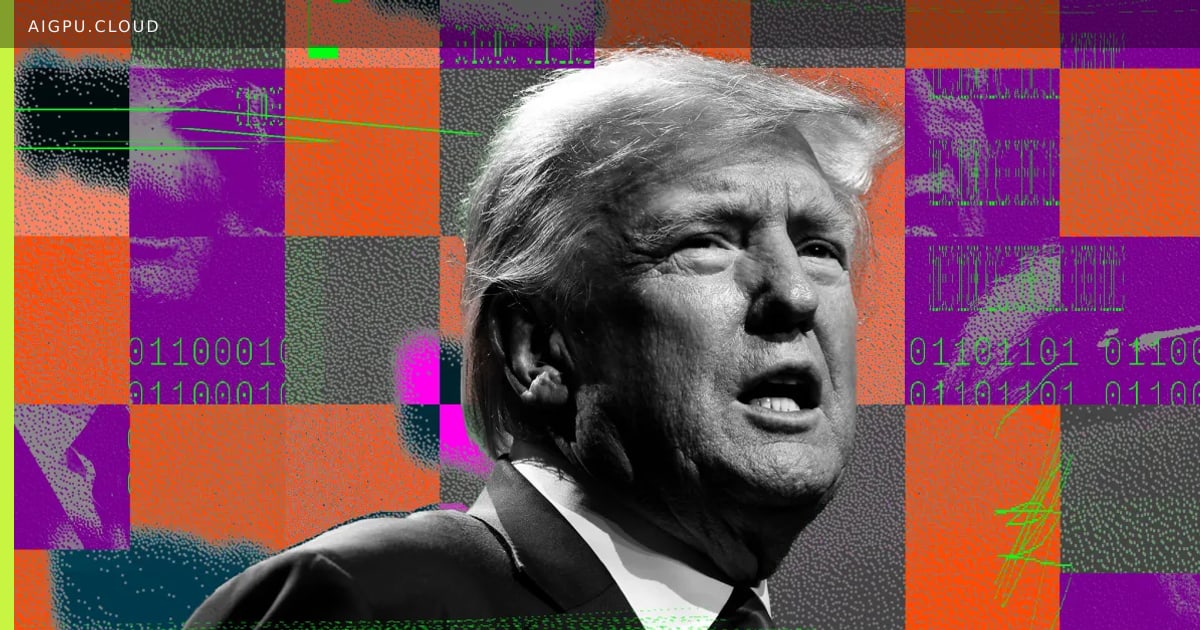
Former President Donald Trump has floated a sweeping new policy that would impose a "tremendous tax" on American companies that choose to locate AI data centers outside the United States. Speaking at a press conference following a trilateral summit with Chinese President Xi Jinping and Russian President Vladimir Putin, Trump framed the move as essential to preventing a repeat of the semiconductor supply-chain vulnerabilities that he argues weakened U.S. technological leadership.
The proposal arrives as a growing number of states and municipalities impose moratoriums or stricter permitting on new data-center projects, citing energy consumption, water use, and local grid strain. Those restrictions are already pushing some operators to evaluate sites in Canada, Mexico, and the Middle East — regions where power is cheaper and regulatory hurdles are lower.
Why it matters for GPU and AI infrastructure
For cloud providers and enterprises planning large-scale GPU clusters, the threat of a punitive cross-border tax adds a new layer of political risk to site-selection decisions. If enacted, such a levy could erase the cost advantage of building in lower-power-cost jurisdictions, forcing capital back into constrained U.S. markets and potentially slowing the pace of AI infrastructure deployment globally.
Congressional dynamics make near-term passage uncertain; a Democratic majority in the House would likely block the measure. Nevertheless, the rhetoric signals that data-center sovereignty is becoming a bipartisan flashpoint, and operators should factor policy volatility into their long-term capacity roadmaps.
- aigpu
- ai gpu
- ai gpu cloud
- aigpu dubai
- data centers
- tax policy
- ai infrastructure
By AiGpu Editorial · Editorial rewrite based on public reporting (The Verge AI)
← All articles