Industry·
Trump's AI Accord: Self-Regulation or Safety Net?
Following a high-profile meeting with President Trump, tech executives signed a voluntary AI safety accord pledging self-regulation by major labs. Simultaneously, OpenAI unveiled 'Dots,' always-on AI agents for everyday use, signaling a transformative shift in workplace automation and consumer AI adoption.
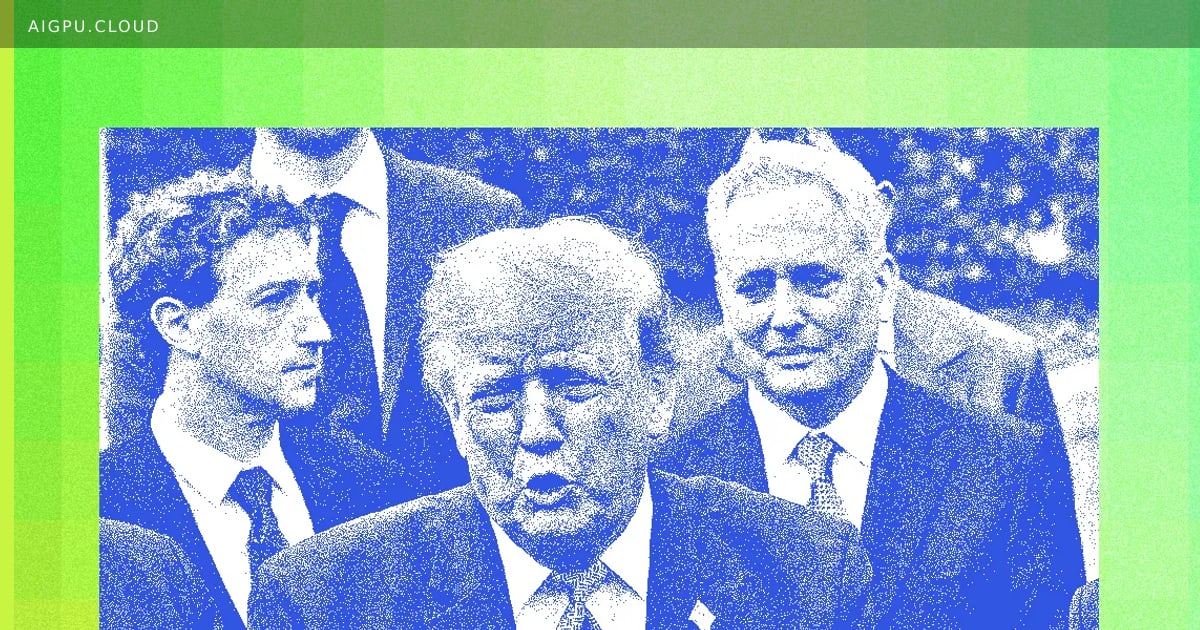
The New AI Accord
In a move that has sparked debate across the technology sector, tech executives convened with President Trump to draft a voluntary AI safety accord. The agreement proposes that leading AI laboratories adopt self-regulatory practices as a substitute for external oversight. While proponents argue this approach fosters innovation without stifling progress, critics warn that unchecked self-regulation could leave critical safety gaps in rapidly evolving systems.
For organizations building next-generation GPU clusters and AI infrastructure, the implications are significant. The accord signals a potential shift toward decentralized governance models where companies bear primary responsibility for model alignment, data privacy, and ethical deployment. This evolution could influence procurement decisions around specialized hardware, as vendors adapt to support compliance frameworks tailored to self-regulated environments.
AI Agents Enter the Mainstream
Parallel developments highlight the commercial momentum behind autonomous AI agents. At OpenAI's recent Developer Day, CEO Sam Altman introduced the 'Dots' initiative — always-on, conversational AI agents designed for non-technical users. These agents represent a paradigm shift, moving beyond narrow task execution to general-purpose assistance that can integrate into daily routines and workplace workflows. Early deployments suggest increased demand for edge-compatible GPU solutions capable of powering these persistent agents locally rather than relying solely on centralized cloud infrastructure.
The rise of such agents raises important questions for enterprise IT strategy. Organizations must evaluate not only compute capacity but also latency constraints, data sovereignty requirements, and the security implications of granting autonomous decision-making authority to software systems. As AI agents proliferate, the distinction between developer-controlled tools and independent operating entities becomes increasingly blurred, necessitating new operational paradigms for managing AI risk at scale.
- aigpu
- ai gpu
- ai gpu cloud
- aigpu dubai
- artificial intelligence
- cloud computing
- machine learning
- industry
By AiGpu Editorial · Editorial rewrite based on public reporting (Wired AI)
← All articles