Industry·
Superhuman Expands Go Assistant Across Docs, Mail, and Third‑Party Agents
Superhuman’s rebranded Go assistant now learns cross‑app context, powers proactive drafting, and integrates 20 new agents via its SDK, signaling a shift toward unified AI productivity layers.
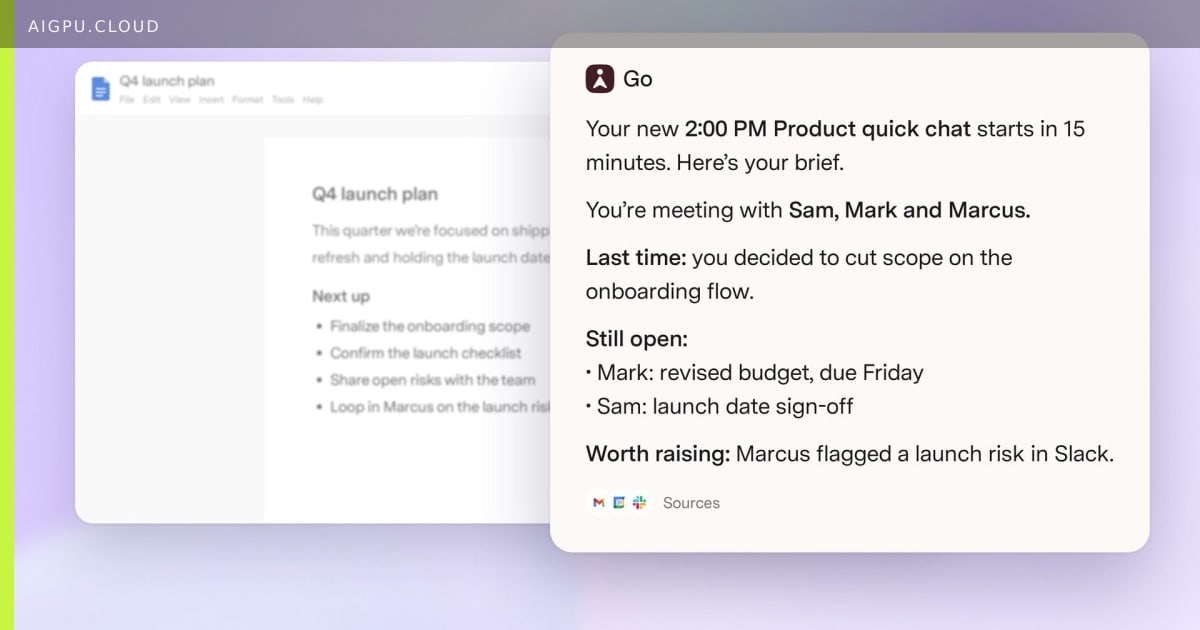
Superhuman, the productivity suite formerly known as Grammarly, has pushed its Go assistant into every corner of its platform. The rollout introduces a revamped onboarding flow that lets users connect preferred tools upfront, giving Go a holistic view of calendars, email threads, and document repositories.
Go now operates inline with the cursor, mirrors the user’s writing style, and can proactively draft replies, schedule meetings, and surface relevant files. The assistant also manages a growing roster of agents — 20 new connections including DeepL, Legora, Amplitude, Databricks, and Blackboard — all exposed through the Go SDK.
In Docs, every Go agent runs natively and can be triggered in the background, while routines automate multi‑step workflows on events such as new emails or calendar changes. Superhuman Mail replaces its legacy AI core with Go, enabling enterprise search across a company knowledge base and unified inbox organization for Google and Outlook accounts. The recent acquisition of notetaker Fathom adds live collaborative note‑taking and post‑meeting draft generation.
CEO Shishir Mehrotra reports over one million active Go users and positions the assistant as a work‑focused companion that still respects personal tasks. He emphasizes that Go aims to compete with consumer‑grade agents like OpenAI’s Dots or Anthropic’s Claude Duet by offering deeper enterprise context.
Why it matters for GPU / AI infrastructure
Each new agent and proactive feature adds inference demand that must be served at low latency across millions of sessions. Scaling such a multi‑tenant, context‑rich assistant requires elastic GPU compute, efficient model serving, and high‑throughput networking — capabilities that a dedicated AI GPU cloud like AiGpu can deliver. As productivity platforms embed more autonomous agents, the underlying infrastructure must evolve from static GPU clusters to dynamic, workload‑aware resource pools.
- aigpu
- ai gpu
- ai gpu cloud
- aigpu dubai
- productivity
- assistant
- superhuman
By AiGpu Editorial · Editorial rewrite based on public reporting (TechCrunch AI)
← All articles