Hardware·
Ring's AI Drone Cam Signals Growing Edge Compute Demands for Home Security
Ring's new autonomous indoor drone camera launches in January 2027, showcasing how on-device AI navigation and real-time video analytics are pushing edge computing requirements in consumer security.
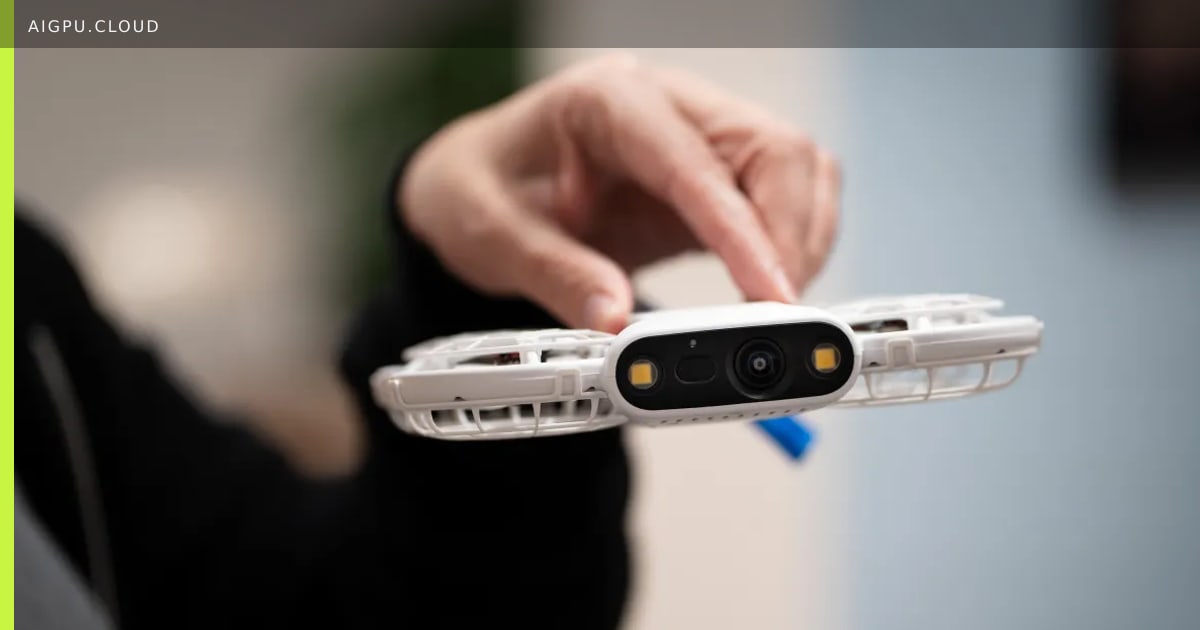
Ring has finally set a ship date for its long-awaited flying indoor camera. The Ring Drone Cam will arrive on January 27, 2027, priced at $249.99, nearly six years after the original Always Home Cam concept was unveiled. Weighing just 165 grams, the device carries a 2K camera with a 148-degree field of view and can cover 360 degrees by flying pre-programmed routes triggered by Ring sensors such as motion detectors, door contacts, water leak sensors, or alarm events.
AI-Driven Flight Without Traditional Sensors
Unlike conventional drones, the Drone Cam lacks obstacle-avoidance sensors beyond those needed for landing. Instead, it relies entirely on onboard AI to navigate hallways and rooms, a design choice that places heavy demands on efficient, low-latency inference at the edge. This approach highlights a growing trend: consumer devices are moving complex computer-vision workloads onto battery-powered platforms, requiring highly optimized models and specialized silicon.
Privacy is addressed through a physical shutter that covers the lens while docked, audible flight noise, and Ring's new TAKE encryption system. TAKE rotates encryption keys every five minutes and purges Ring's key copies after 24 hours, limiting cloud access while still allowing cloud-based smart alerts and AI-powered video search. The hybrid architecture — local navigation, cloud analytics — exemplifies the split compute model that many AI-driven IoT products are adopting.
Why it matters for GPU / AI infrastructure: Products like the Drone Cam create a dual pull on AI infrastructure. Training the navigation and recognition models demands large-scale GPU clusters, while deployment requires edge-optimized inference that can run within tight power and thermal envelopes. As more vendors embed autonomous mobility into home devices, the need for scalable GPU cloud resources for model development and low-latency edge serving will only intensify.
- aigpu
- ai gpu
- ai gpu cloud
- aigpu dubai
- edge ai
- consumer security
- ring drone
- ai hardware
By AiGpu Editorial · Editorial rewrite based on public reporting (The Verge AI)
← All articles