Infrastructure·
ReactOS Hits Major Milestone with Native NTFS Installation Support
The open‑source Windows‑compatible OS ReactOS can now be installed directly onto NTFS partitions, removing a decade‑old limitation and moving the project closer to beta status.
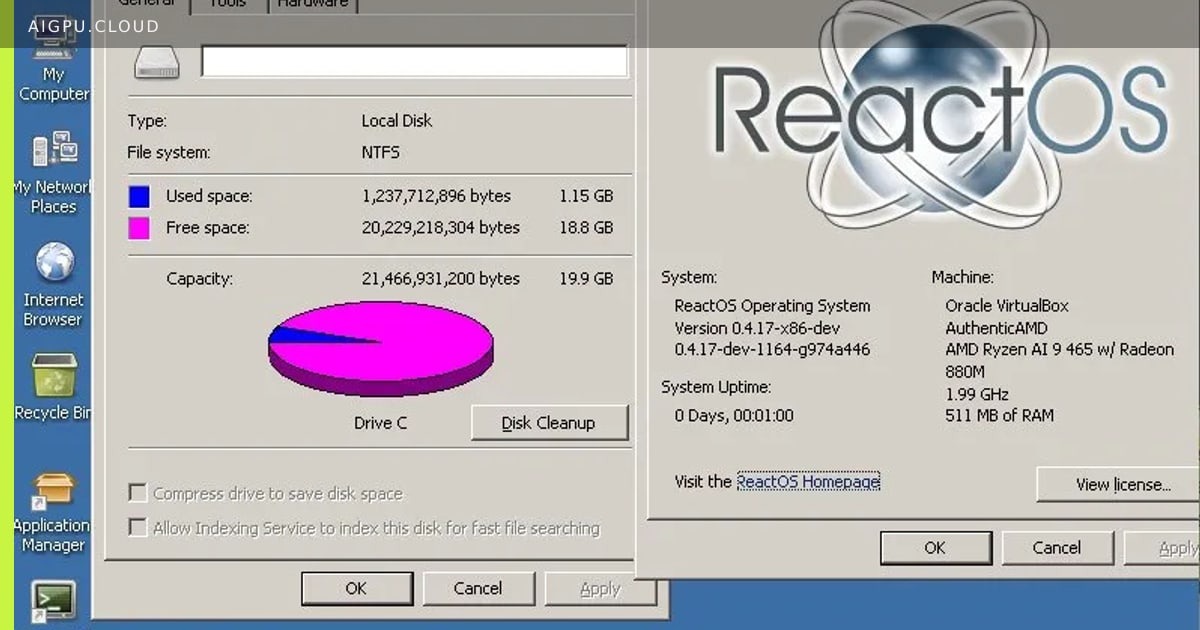
The ReactOS project has announced that its kernel can now be installed on an NTFS volume without requiring a separate FAT32 partition. This breakthrough eliminates a long‑standing practical barrier for developers and testers who want a Windows‑like environment on the same filesystem used by production Windows systems.
The new NTFS driver, contributed by community volunteers, provides basic read‑write capability but still lacks caching, journaling, and full security descriptor support. The ReactOS team cautions that performance is lower than native Windows and that undiscovered bugs may remain, so the driver is best suited for evaluation rather than production workloads.
Read‑only NTFS access arrived in 2016, and boot‑loader support followed in 2022. The latest addition closes a nearly ten‑year gap, allowing the installer to write system files directly to an NTFS partition for the first time.
Why it matters for GPU / AI infrastructure
For GPU cloud providers such as AiGpu, OS compatibility directly affects driver stacks, container runtimes, and bare‑metal provisioning. A Windows‑compatible OS that runs on NTFS simplifies dual‑boot testbeds, eases migration of legacy Windows workloads, and reduces the filesystem‑related friction when benchmarking GPU accelerators across platforms.
ReactOS remains a volunteer‑driven effort, and the project invites contributors to help harden the NTFS implementation. While it may never replace Windows for mainstream users, each milestone brings the open‑source ecosystem closer to a truly binary‑compatible alternative for specialized infrastructure scenarios.
- aigpu
- ai gpu
- ai gpu cloud
- aigpu dubai
- reactos
- ntfs
- open-source
- operating-system
By AiGpu Editorial · Editorial rewrite based on public reporting (Ars Technica)
← All articles