Industry·
Plurai Tackles AI Agent Reliability with Simulation-Based Training
Plurai has raised $13 million to build a simulation layer that prepares AI agents for complex tasks by creating digital twins of company systems and mapping agent workflows. The startup aims to boost reliability and cost efficiency, addressing the gap between impressive benchmarks and real-world performance.
AI agents have become a hot topic, yet their real-world capabilities remain limited. Recent benchmarks reveal that models like Claude Fable 5.2 and ChatGPT-6 Astra achieve only 82.9% and 75.6% respectively on complex tasks, while even the most advanced Claude Opus 4.8 struggles with edge cases in simulated corporate environments. This gap between promising benchmarks and practical reliability is where Plurai is stepping in.
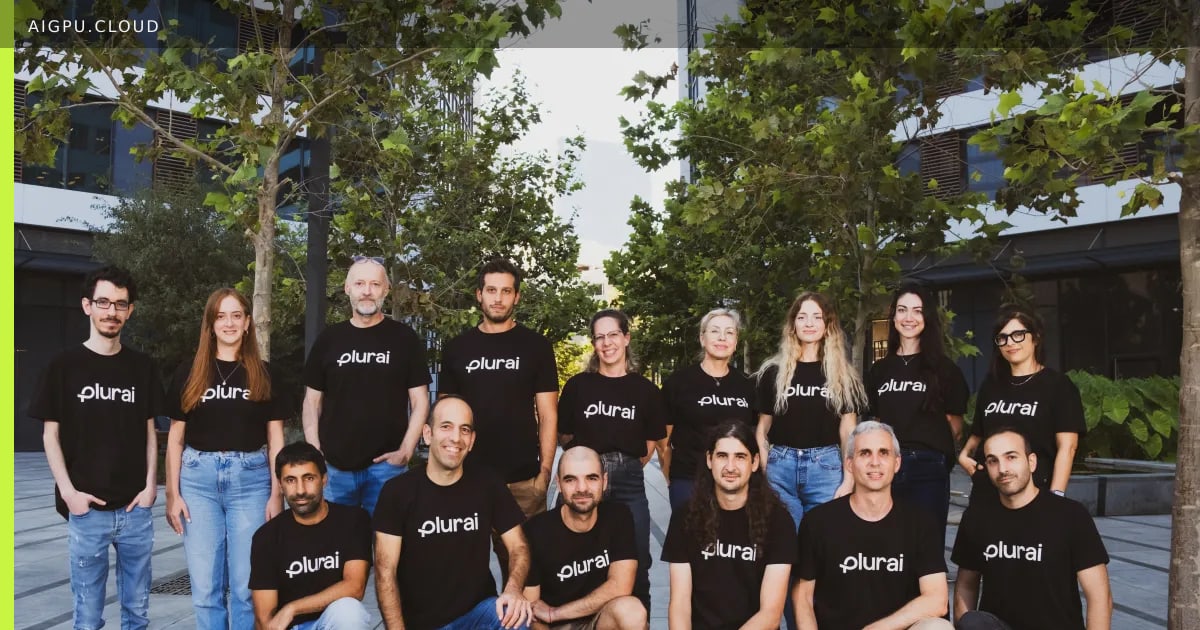
Founded by Ilan Kadar and Elad Levi—former Nexar and Waymo engineers—the startup has secured $13 million in seed funding led by Team8. Their core innovation lies in building a simulation layer that mirrors the approach that brought self-driving cars to the road. By creating digital twins of a company’s electronic systems, including knowledge bases and tools, Plurai maps all possible agent workflows and prepares models with targeted fixes for edge cases.
Unlike traditional training that relies on real-world data, Plurai’s method uses synthetic data generated from the company’s own digital infrastructure. This allows models to practice rare scenarios, handle ambiguous instructions, and avoid costly failures in production. The platform integrates with existing agentic tools such as Claude Code, Codex, Copilot, and Cursor, while also enabling the post-training of small, open-weight models tailored to specific customer needs.
In collaboration with Nvidia and Nebius, Plurai demonstrated that its models can outperform mid-tier frontier models at a fraction of the cost. The process involves decomposing a large language model into smaller tasks, training an open-weight model through simulation, and verifying quality through synthetic evaluation. This approach promises an order or two of magnitude cost reduction while maintaining competitive performance.
Google DeepMind researcher Reah Miyara, an angel investor in Plurai, highlighted that the startup’s edge comes from understanding failure modes in production and generating synthetic data to tune models. For businesses optimizing AI expenses, Plurai’s strategy offers a sustainable alternative to relying on expensive frontier models that often perform poorly on out-of-distribution data.
- aigpu
- ai gpu
- ai gpu cloud
- aigpu dubai
- infrastructure
- hardware
- industry
By AiGpu Editorial · Editorial rewrite based on public reporting (TechCrunch AI)
← All articles