Industry·
Philadelphia Protest Highlights Growing Friction Between AI Automation and Labor
A protester's arrest for blocking an Uber delivery robot underscores rising public tension over autonomous systems displacing low-skill jobs — and the GPU infrastructure powering them.
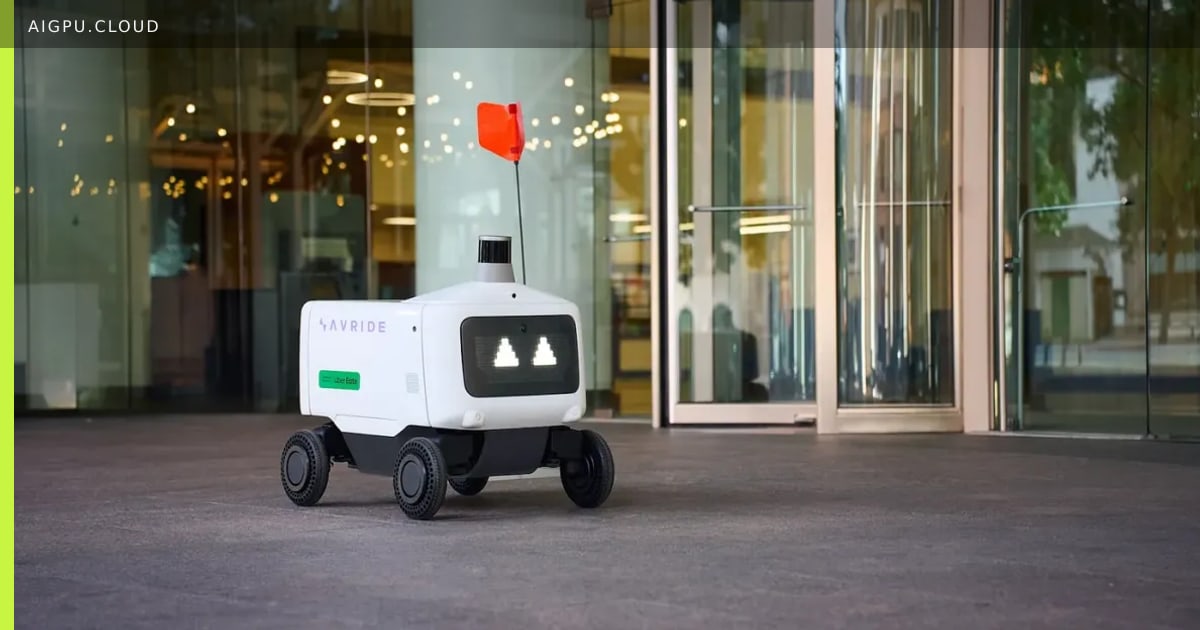
Philadelphia police arrested Carolyn Marvin on disorderly conduct charges after she refused to move from the path of an Uber Eats delivery robot. Marvin told local media she has repeatedly blocked the machines to protest their displacement of human couriers. The incident, captured on video, reignited debate over how autonomous delivery fleets — now common in Center City — are reshaping sidewalk dynamics and labor markets.
Delivery robots rely on onboard computer vision, SLAM navigation, and real-time inference pipelines that demand low-latency GPU compute at the edge. As companies scale these fleets, the underlying AI models grow larger, requiring more training cycles on high-density GPU clusters. Each deployed unit represents a continuous inference workload that feeds back into model refinement loops.
Why it matters for GPU / AI infrastructure
The backlash signals a broader policy risk: municipalities may impose operating restrictions, curfews, or licensing regimes that slow fleet expansion. For infrastructure providers, that translates into uncertain demand forecasting for edge GPU capacity. Conversely, sustained deployment drives steady demand for training clusters, model optimization tooling, and low-power inference accelerators — all core to the AI hardware supply chain.
As autonomous agents proliferate across logistics, ride-hailing, and last-mile delivery, the tension between automation economics and workforce stability will shape both regulation and capital allocation. GPU cloud operators must track these signals to align capacity planning with the real-world adoption curve of embodied AI.
- aigpu
- ai gpu
- ai gpu cloud
- aigpu dubai
- ai infrastructure
- automation
- robotics
- policy
By AiGpu Editorial · Editorial rewrite based on public reporting (The Verge AI)
← All articles