Industry·
NVIDIA SimReady Assets Streamline Robot Pick-and-Place Simulation in Isaac Sim
A new Hugging Face walkthrough demonstrates how SimReady-validated OpenUSD assets — UR17G arm, Robotiq 2F-140 gripper, and a beverage can — enable rapid scene composition and agent-driven pick-and-place workflows in Isaac Sim.
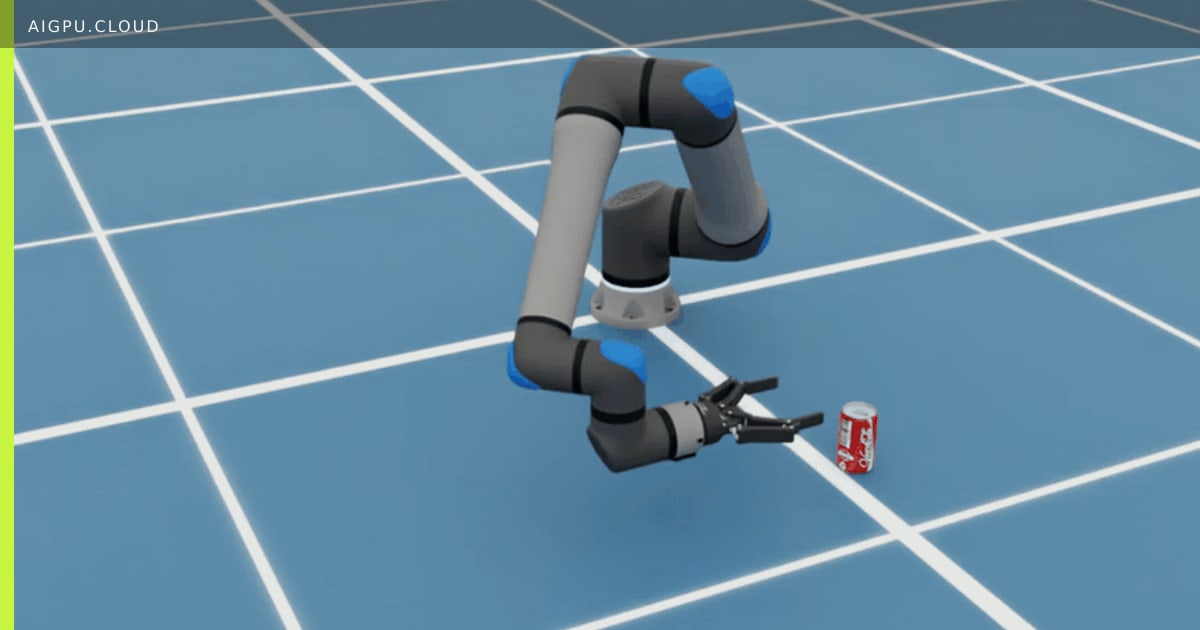
NVIDIA and Hugging Face have published a step-by-step guide for building a robot pick-and-place simulation using SimReady assets in Isaac Sim. The tutorial assembles a Universal Robots UR17G arm, a Robotiq 2F-140 gripper, and a beverage can — each packaged with validated collision meshes, mass properties, joint limits, and drive settings — into a single OpenUSD scene. SimReady Central, the open asset library hosted on Hugging Face, supplies these pre-qualified models so engineers can skip manual property authoring and move straight to task logic.
Why SimReady matters for simulation fidelity
The SimReady Foundation defines three-layer specifications — profiles, features, and requirements — that guarantee an asset behaves correctly under physics. Before running the pick-and-place task, the guide recommends verifying joint limits, testing small arm motions and gripper actuation, and confirming the can rests stably on the work surface. These checks catch discrepancies that look fine visually but fail once the simulator steps forward.
Task code — generated here with a frontier model (GPT-6 Sol) — defines the arm–gripper assembly, work surface, start poses, and the pick-place-release sequence. Because the assets already carry simulation-ready metadata, the agent can focus on high-level planning rather than low-level USD wiring. The same workflow extends to other OEM-curated assets discoverable via the SimReady Central search endpoint.
Why it matters for GPU / AI infrastructure: SimReady reduces the iteration cycle for robotics teams training perception and control policies on GPU clusters. Pre-validated assets mean fewer physics debugging cycles, faster synthetic data generation, and more efficient use of AI compute — directly aligning with the needs of teams scaling simulation workloads on platforms like AiGpu.
- aigpu
- ai gpu
- ai gpu cloud
- aigpu dubai
- nvidia
- isaac sim
- simready
- robotics simulation
By AiGpu Editorial · Editorial rewrite based on public reporting (Hugging Face Blog)
← All articles