Hardware·
NVIDIA Unveils Rubin HPC GPU to Power Agent‑Driven Scientific Simulations
At SC26 NVIDIA introduced the Rubin HPC GPU, a new accelerator built for the Vera Rubin platform that delivers over 50,000 CUDA cores, seventh‑gen NVLink, and sparse‑data engines to speed up simulation loops used by AI agents in science and engineering.
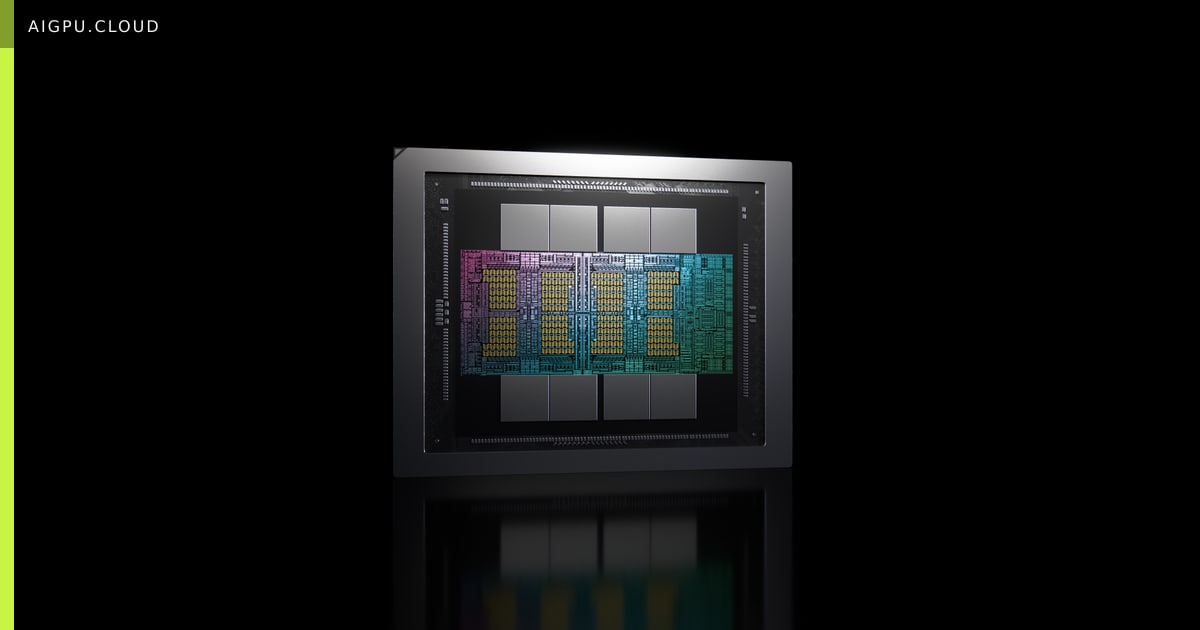
NVIDIA has lifted the curtain on Rubin HPC, a graphics processor purpose‑built for the Vera Rubin platform and aimed squarely at the simulation workloads that AI agents now drive across climate modeling, materials discovery, genomics, and financial risk analysis.
The chip packs a record‑setting count of more than 50,000 CUDA cores on a single die, complemented by a sparse‑data acceleration engine that keeps those cores fed without stalling. Seventh‑generation NVLink interconnects provide high‑bandwidth GPU‑to‑GPU links, ensuring that data movement scales alongside compute.
Because modern research teams increasingly rely on autonomous agents to propose candidate molecules, designs, or climate scenarios, the speed of the underlying simulation becomes the bottleneck. Rubin HPC shortens the hypothesis‑simulate‑refine loop, letting agents evaluate more possibilities in less wall‑clock time.
Why it matters for GPU / AI infrastructure
Balancing raw arithmetic with data‑movement capacity is the key to efficient high‑performance computing. By co‑scaling compute and interconnect, Rubin HPC reduces idle cycles on massive core counts, delivering higher sustained throughput for sparse matrix kernels, stencil codes, and large‑scale reductions that dominate scientific pipelines.
NVIDIA expects the first Rubin HPC systems to ship in 2028, giving cloud providers and research centers a clear roadmap for next‑generation AI‑augmented simulation clusters.
- aigpu
- ai gpu
- ai gpu cloud
- aigpu dubai
- nvidia
- rubin hpc
- high performance computing
- gpu acceleration
By AiGpu Editorial · Editorial rewrite based on public reporting (NVIDIA Blog)
← All articles