Hardware·
Nirva Secures $33M for Privacy-First AI Pendant That Listens Only to Its Wearer
Former Meta Reality Labs founders launch a jewelry-grade wearable that isolates the user's voice for personal insights, raising $33M to bring ambient AI to the edge without compromising privacy.
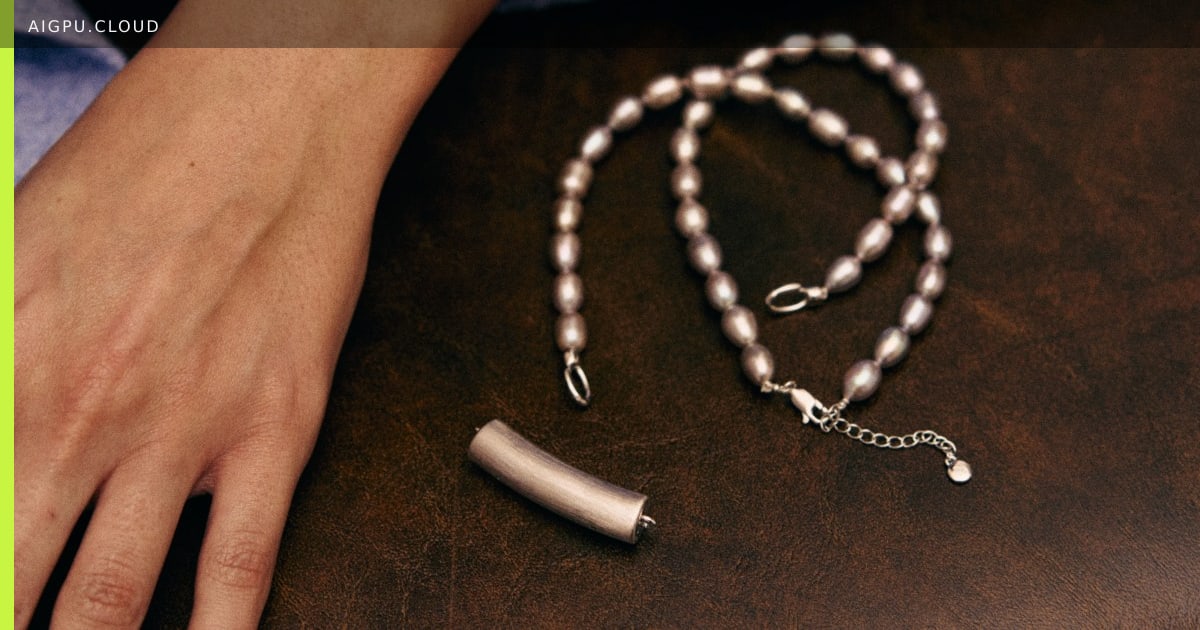
Nirva, a startup founded by ex-Meta Reality Labs engineers Wei Lyu and Jason Chen alongside jewelry entrepreneur Hanying Hu, has closed a $25 million pre-Series A round led by Lightspeed and South Park Commons. Combined with an earlier $8 million seed, total funding reaches $33 million. The company's first product is an eight-gram pendant — also wearable as a bracelet — that runs three days on a charge and ships in November.
Voice isolation at the edge
Unlike generic voice recorders or meeting assistants, Nirva's device passively captures only the wearer's speech. During onboarding, users record short voice samples; the on-device model then filters out nearby conversations in real time. Audio and transcripts are discarded after processing, addressing the privacy concerns that have plagued ambient wearables such as smart glasses.
The companion app translates speech patterns into insights on emotional tone, communication style, and behavioral nudges — for example, reminding a user to thank a family member. By analyzing pitch, volume, and cadence before deletion, the system builds a personal model without retaining raw data.
Why it matters for GPU / AI infrastructure: Training speaker-separation and emotion-classification models that run on a sub-10-gram device demands efficient architectures and quantization pipelines. As ambient AI moves to jewelry-scale form factors, demand grows for cloud GPU clusters that can iterate on tiny-footprint models and for edge inference stacks that preserve privacy by design.
- aigpu
- ai gpu
- ai gpu cloud
- aigpu dubai
- wearable ai
- edge inference
- ambient computing
- privacy ai
By AiGpu Editorial · Editorial rewrite based on public reporting (TechCrunch AI)
← All articles