Industry·
MIT's Human Insight Collaborative Examines AI's Reshaping of Society and Cognition
MIT's MITHIC initiative has funded 67 projects with $5.5M since 2024, with a third focused on how generative AI alters learning, creative friction, and human intellect — critical signals for AI infrastructure planning.
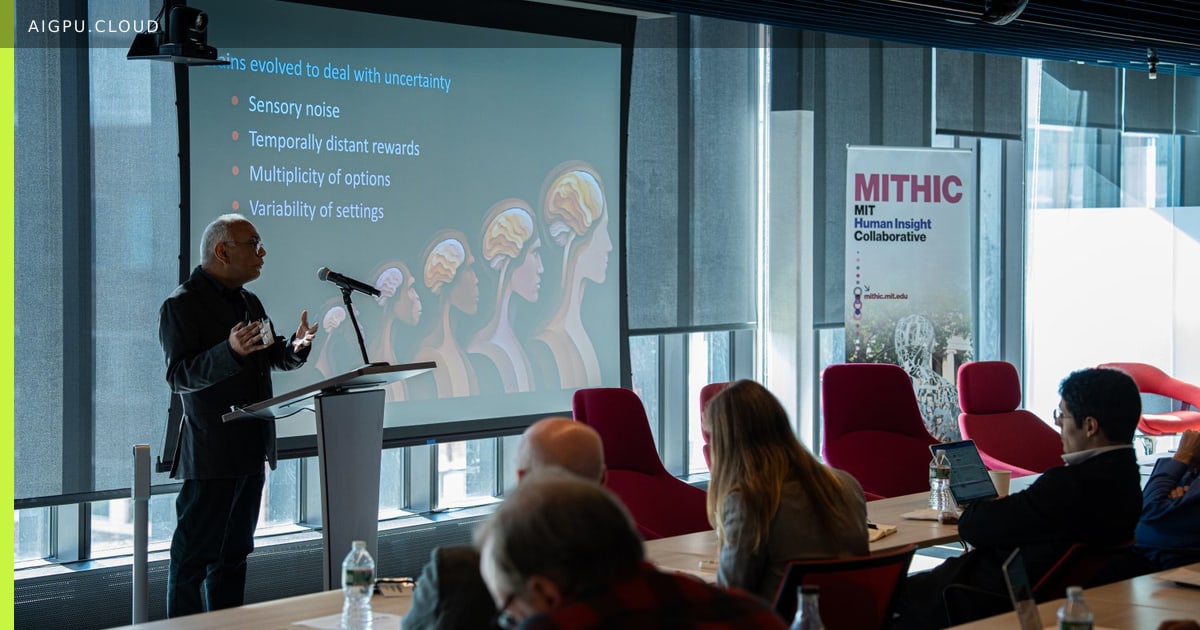
MIT's Human Insight Collaborative (MITHIC) is directing serious academic firepower at a question that should concern every AI infrastructure provider: how does generative AI change the way humans think, learn, and relate to one another? Launched in 2024 as a strategic initiative, MITHIC has deployed $5.5 million across 67 projects spanning 31 MIT units. Roughly one-third target AI, society, and humanity — a share that continues to grow.
Eroding Creative Friction in Education
A recent MIT report on AI and education surfaced troubling patterns: students attend office hours less frequently, spend less time wrestling with problem sets, and engage less with peers. Faculty warn this erodes the "creative friction" — debate, challenge, iteration — that has long defined rigorous technical education. As Seth Mnookin, MITHIC co-lead and head of Comparative Media Studies, put it: the issue isn't adaptation; it's whether we're asking fundamental enough questions about cognitive offloading.
Parallel research led by neuroscientist Pawan Sinha and education scholar Eric Klopfer probes how AI might reshape human intellect over time. Their work, presented at an "AI and the Brain" forum co-organized by MITHIC, SERC, and the MIT Generative AI Impact Consortium, examines cognition under persistent AI augmentation.
Why it matters for GPU / AI infrastructure: These shifts signal evolving workload profiles. If learners and knowledge workers increasingly rely on AI-assisted reasoning rather than raw computation, inference patterns, latency requirements, and model-serving architectures will adapt. Infrastructure providers tracking these sociotechnical signals can anticipate demand curves — not just for raw FLOPS, but for interactive, low-latency, human-in-the-loop AI systems.
- aigpu
- ai gpu
- ai gpu cloud
- aigpu dubai
- ai infrastructure
- human-ai interaction
- mit research
- generative ai
By AiGpu Editorial · Editorial rewrite based on public reporting (MIT News AI)
← All articles