Research·
MIT Researchers Enforce Physics Constraints to Stabilize AI Models of Chaotic Systems
A new MIT method bakes energy dissipation into neural networks, preventing unbounded drift in long-horizon forecasts for weather, turbulence, and climate.
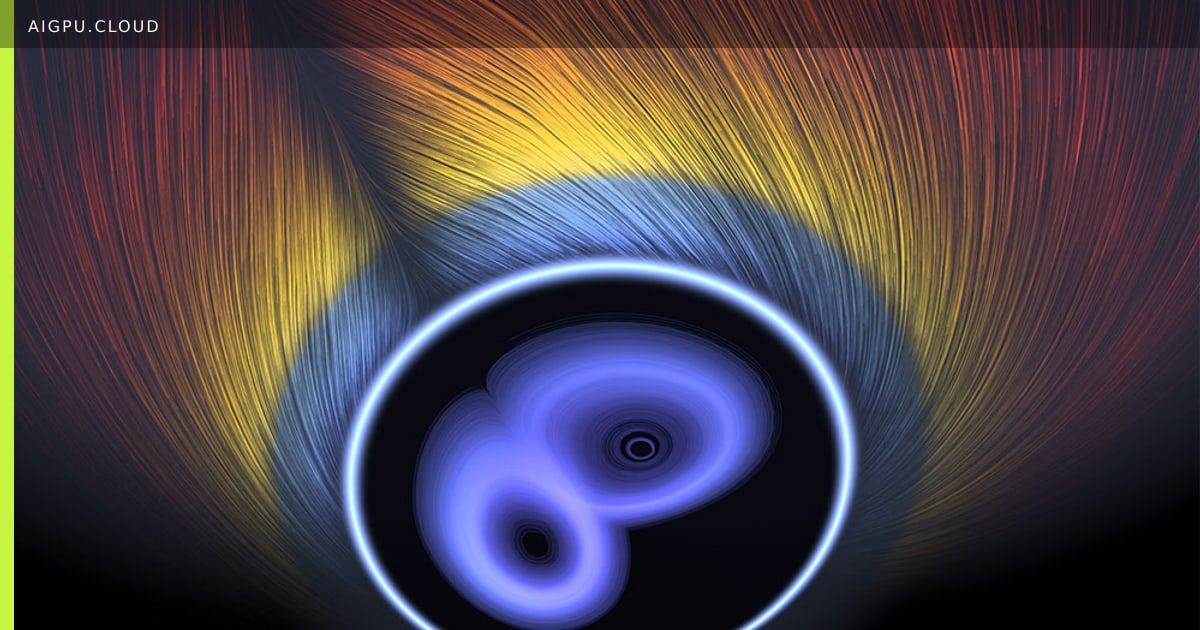
MIT's Laboratory for Information and Decision Systems has introduced a training framework that hard-codes energy dissipation as a non-negotiable constraint inside data-driven models of chaotic dynamics. By guaranteeing that predicted trajectories remain within physically admissible bounds, the technique eliminates the runaway growth that has long plagued neural-network surrogates for weather, turbulent flow, and climate simulation.
The approach, published in PNAS by graduate student Sunbochen Tang and professors Navid Azizan and Themistoklis Sapsis, wraps the loss function with a Lyapunov-style certificate that enforces boundedness without suppressing the sensitive dependence on initial conditions that defines chaos. In benchmark tests on the Kuramoto–Sivashinsky equation and a reduced-order atmospheric model, the constrained networks matched short-term accuracy of unconstrained baselines while remaining stable for integration horizons an order of magnitude longer.
Why it matters for GPU / AI infrastructure
Training and deploying these physics-informed architectures demands high-throughput tensor compute and large GPU memory footprints—especially when ensembles are required for uncertainty quantification. Cloud platforms that offer on-demand H100 or Blackwell clusters with fast interconnects can cut time-to-solution from weeks to days, making bounded chaotic modeling practical for operational forecasting centers and industrial digital twins.
- aigpu
- ai gpu
- ai gpu cloud
- aigpu dubai
- physics-informed ml
- chaotic systems
- climate modeling
- gpu cloud
By AiGpu Editorial · Editorial rewrite based on public reporting (MIT News AI)
← All articles