Research·
MIT Researcher Jacob Andreas Advances AI Models That Explain Themselves
MIT associate professor Jacob Andreas develops techniques for AI models to communicate their internal reasoning in human language, aiming to improve interpretability and robustness for high-stakes deployments.
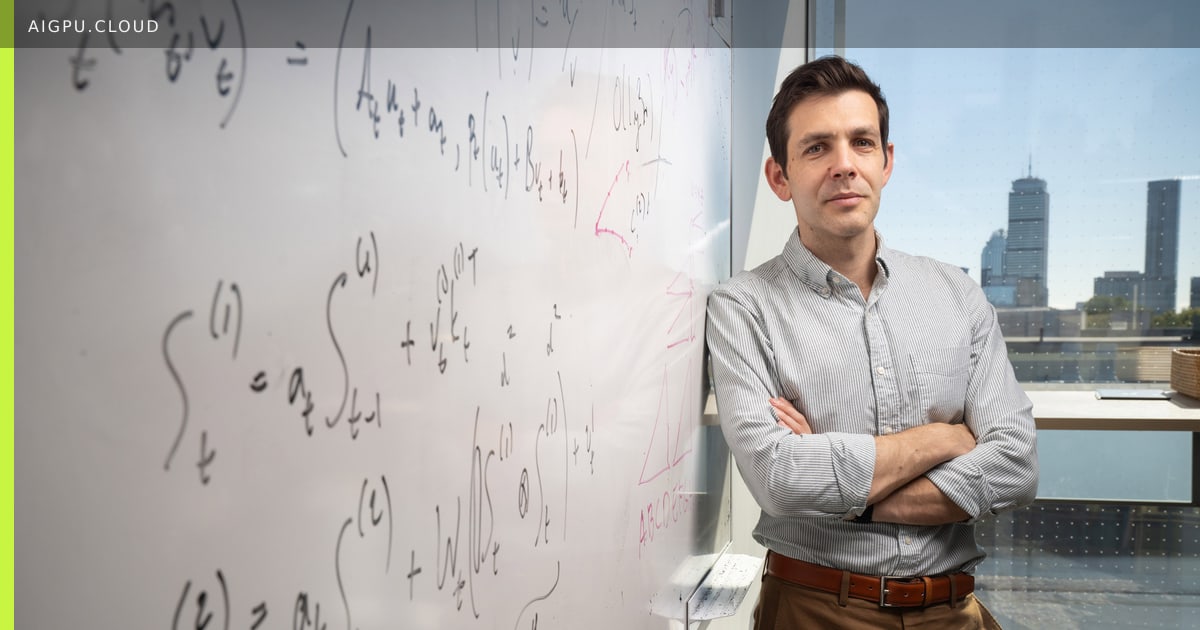
Associate Professor Jacob Andreas of MIT's Department of Electrical Engineering and Computer Science is pioneering methods that let deep learning models articulate what they have learned in plain language. Instead of relying on external probing tools to decipher hidden layers, his group trains models to generate accurate self-descriptions, making their decision processes transparent to human operators.
This approach shifts the interpretability burden from post-hoc analysis to the training objective itself. By embedding communication skills into the learning loop, models acquire a more natural, human-like understanding of concepts, which Andreas argues leads to more efficient and trustworthy systems.
Why it matters for GPU and AI infrastructure
Self-explaining models reduce the need for massive compute-intensive debugging pipelines. When a model can reliably report its own reasoning, engineers spend fewer GPU hours on saliency maps, attention visualizations, and adversarial testing. This directly lowers operational costs and accelerates deployment cycles for enterprise AI workloads running on platforms like aigpu.cloud.
Andreas also emphasizes deep technical foundations for the next generation of AI practitioners. He stresses that understanding the underlying mechanics — not just calling APIs — will differentiate engineers in a landscape where coding agents are ubiquitous. That philosophy aligns with the demand for hardware-aware model design that maximizes throughput on modern AI GPU clusters.
- aigpu
- ai gpu
- ai gpu cloud
- aigpu dubai
- model interpretability
- language models
- mit research
- ai explainability
By AiGpu Editorial · Editorial rewrite based on public reporting (MIT News AI)
← All articles