Research·
MIT's CheMeleon Model Predicts Molecular Behavior with Minimal Data
A new open‑source machine‑learning framework from MIT, called CheMeleon, learns chemistry from a million molecules and then fine‑tunes to predict properties such as potency, toxicity, and solubility with very little experimental data. The model has already been adopted by several pharmaceutical firms and topped a major prediction challenge.
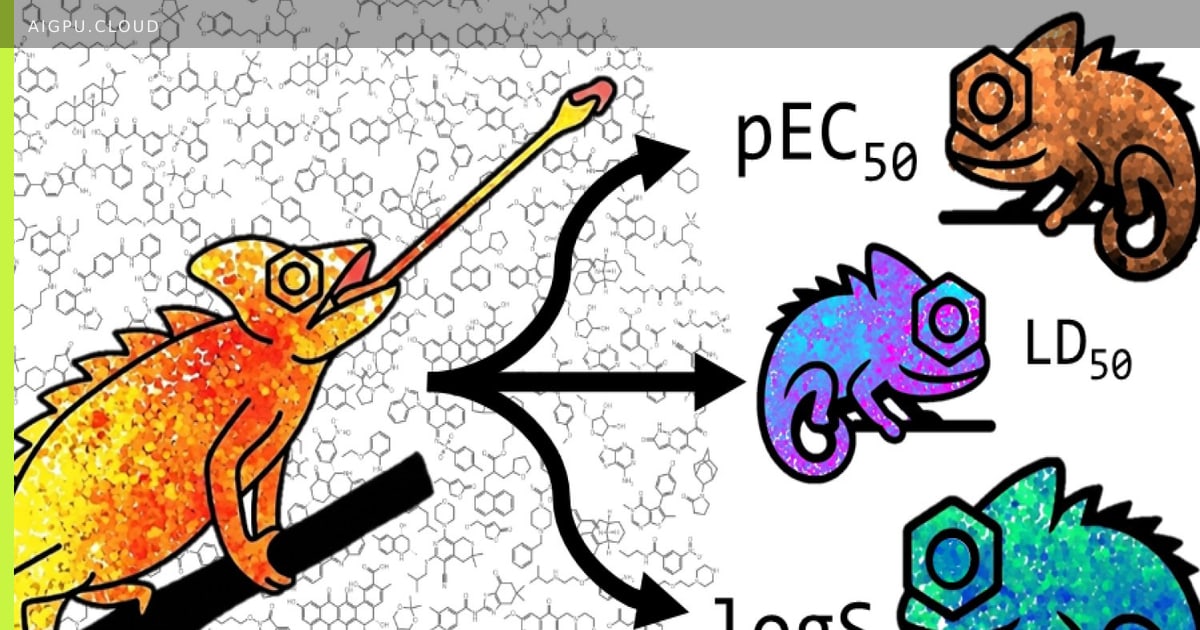
MIT researchers have unveiled CheMeleon, a machine‑learning system that first absorbs broad chemical knowledge by predicting easy‑to‑compute descriptors for roughly one million molecules. After this pre‑training phase, the same model can be quickly adapted to any specific property — such as ligand affinity, toxicity, or solubility — using only a handful of labeled examples.
The approach builds on ChemProp, an open‑source library maintained by the same group, and is freely available for download. In a recent OpenADMET competition, nine of the top‑20 entries relied on CheMeleon, prompting at least one major pharma company to make it the default starting point for all molecular modeling projects.
Why it matters for AI infrastructure
CheMeleon demonstrates how a single large‑scale pre‑trained model can serve many downstream tasks, reducing the need for repeated full‑scale training runs. For GPU cloud providers, this pattern translates into higher utilization of existing clusters: customers can fine‑tune a shared foundation model on modest GPU allocations instead of provisioning dedicated large‑scale training jobs for each new property.
The open‑source nature of the code also encourages rapid experimentation, letting research teams iterate on model architecture and data strategies without incurring prohibitive compute costs. As more domains adopt this transfer‑learning paradigm, demand for flexible, on‑demand GPU resources — like those offered by AiGpu — is expected to grow.
- aigpu
- ai gpu
- ai gpu cloud
- aigpu dubai
- molecular modeling
- machine learning
- drug discovery
- cheminformatics
By AiGpu Editorial · Editorial rewrite based on public reporting (MIT News AI)
← All articles