Hardware·
Microsoft Unveils Maia 300 AI Chip to Reduce Dependence on Nvidia GPUs
Microsoft's third‑generation Maia 300 accelerator promises 40% more tokens per megawatt and up to 7× rack‑scale throughput over its predecessor, with production slated for 2027.
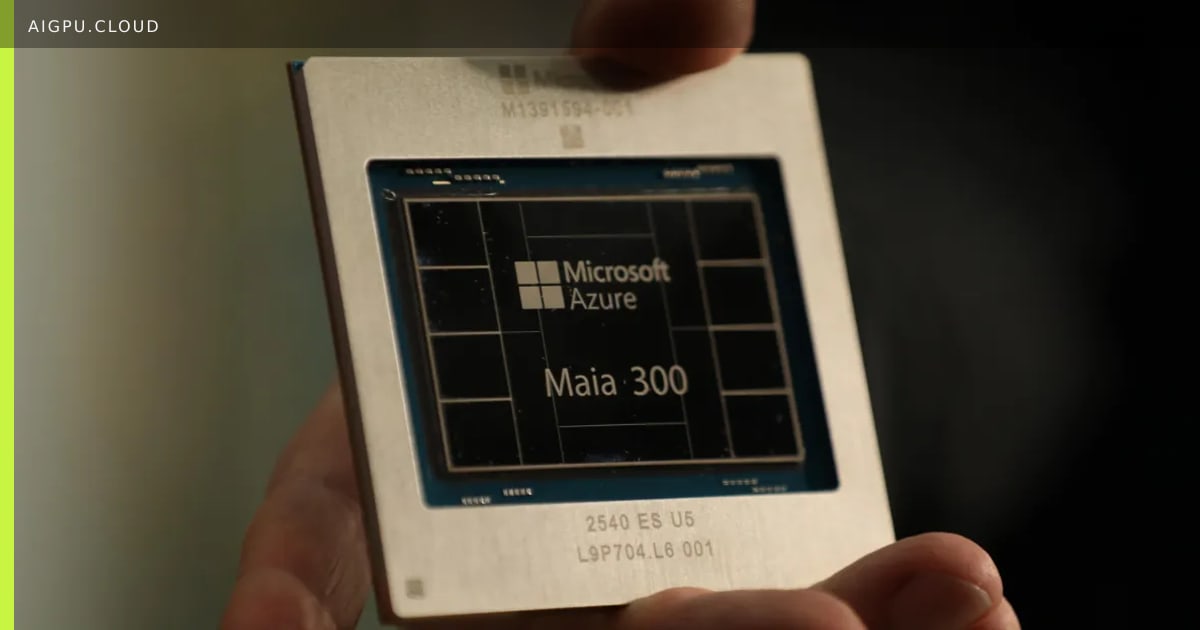
Microsoft has announced its third‑generation Maia 300 accelerator, positioning the chip as the primary AI inference engine for Azure and the company's own services.
The new silicon targets a 40 percent increase in tokens per megawatt compared with leading GPU‑based systems and delivers up to seven times the rack‑scale token throughput of Maia 200. Production rollout is scheduled for 2027.
Chiplet design on TSMC N2P
Maia 300 adopts a chiplet architecture that separates compute, memory‑controller, and I/O functions onto distinct dies fabricated on TSMC’s N2P process. This layout expands the silicon area dedicated to compute and lets each block use the technology best suited to its role.
Why it matters for GPU / AI infrastructure: By scaling the Maia family to multi‑gigawatt deployments, Microsoft can substantially cut its reliance on Nvidia and AMD GPUs, lower the cost per inference, and co‑design hardware with its proprietary models for tighter performance‑per‑watt optimization.
Maia 200 already powers production workloads such as Microsoft Copilot, GitHub Copilot, and Microsoft Foundry. Maia 300 extends that foundation to long‑context reasoning, latency‑sensitive conversational experiences, and sustained multi‑step agentic tasks.
- aigpu
- ai gpu
- ai gpu cloud
- aigpu dubai
- microsoft
- maia-300
- custom-silicon
- cloud-infrastructure
By AiGpu Editorial · Editorial rewrite based on public reporting (The Verge AI)
← All articles