Industry·
Microsoft Unveils Copilot Super App Unifying Chat, Coding, and Autonomous Agents
Microsoft launches a redesigned Copilot app combining AI chat, low-code development, and persistent Autopilot agents under usage-based billing, targeting enterprise workflows with tenant-level security.
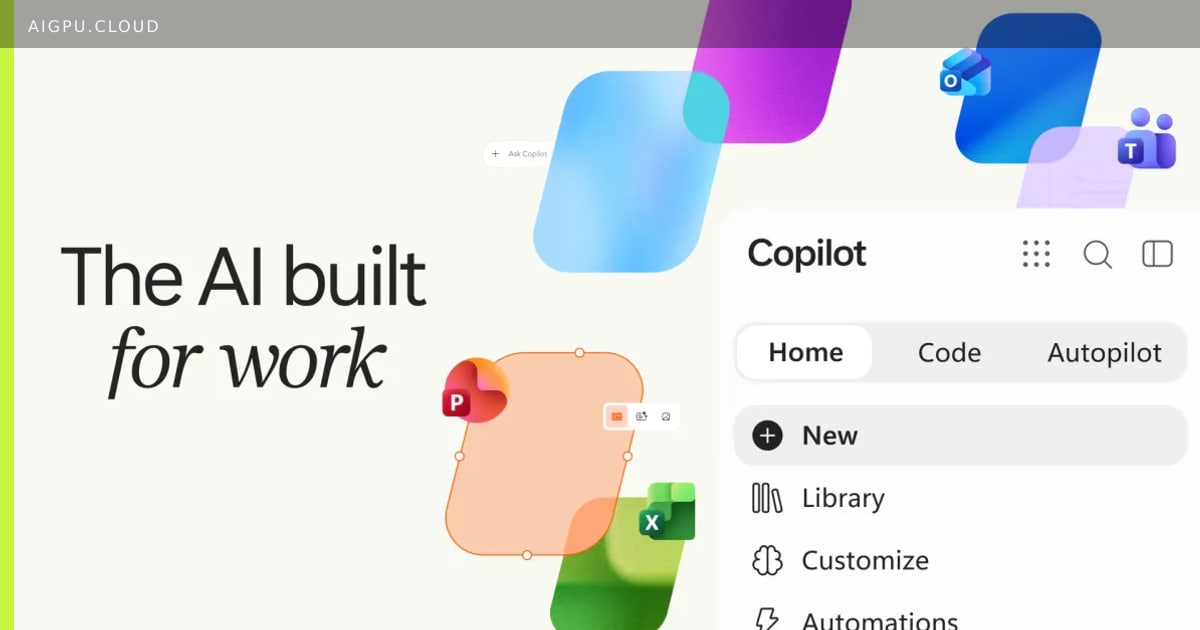
Microsoft has officially released its long-teased Copilot "super app," a single interface that merges conversational AI, a built-in coding environment, and persistent autonomous agents called Autopilot. The app opens with three tabs — Home, Code, and Autopilot — each designed to keep knowledge workers and developers in one workspace without context switching.
Home, Code, and Autopilot explained
The Home tab blends Copilot Chat with Cowork, adding a personalized Today dashboard that surfaces emails, Teams threads, and meeting requests. Code introduces a sandboxed, tenant-hosted development canvas powered by GitHub Copilot technology, letting any user spin up internal apps, trackers, or automations and share them securely. Autopilot, rebranded from the earlier Scout project, runs as a cloud-resident digital teammate with its own identity, memory, and compute instance inside the customer's Microsoft 365 tenant.
Enterprise governance is central: Autopilot appears in Teams, Outlook, and SharePoint as an @-mentionable colleague, complete with permissions, audit logs, and data-residency controls. Microsoft says the agent understands organizational context through the Microsoft Graph, enabling it to monitor channels, execute recurring tasks, and handle follow-ups while the user is offline.
Pricing shifts to a consumption model. Core chat remains licensed per seat, while Cowork, Code, and Autopilot usage — including long-running agent loops and advanced model calls — is metered. This aligns cost with actual AI compute demand, a move that signals growing pressure on GPU capacity planning.
Why it matters for GPU / AI infrastructure: Persistent agents like Autopilot require always-on inference endpoints and sandboxed execution environments, driving sustained demand for GPU-backed inference clusters. Usage-based billing also incentivizes customers to optimize token efficiency, pushing model providers and cloud platforms to deliver higher throughput per watt.
- aigpu
- ai gpu
- ai gpu cloud
- aigpu dubai
- microsoft copilot
- ai agents
- enterprise ai
- usage-based billing
- gpu infrastructure
By AiGpu Editorial · Editorial rewrite based on public reporting (The Verge AI)
← All articles