Industry·
Macmillan's NOA Chatbot Flops: Lessons for Enterprise AI Infrastructure Buyers
Macmillan Publishers launched and then quietly killed an internal AI assistant after staff found it unreliable. The episode highlights the gap between AI marketing promises and production reality — a cautionary signal for teams procuring GPU compute and model-serving infrastructure.
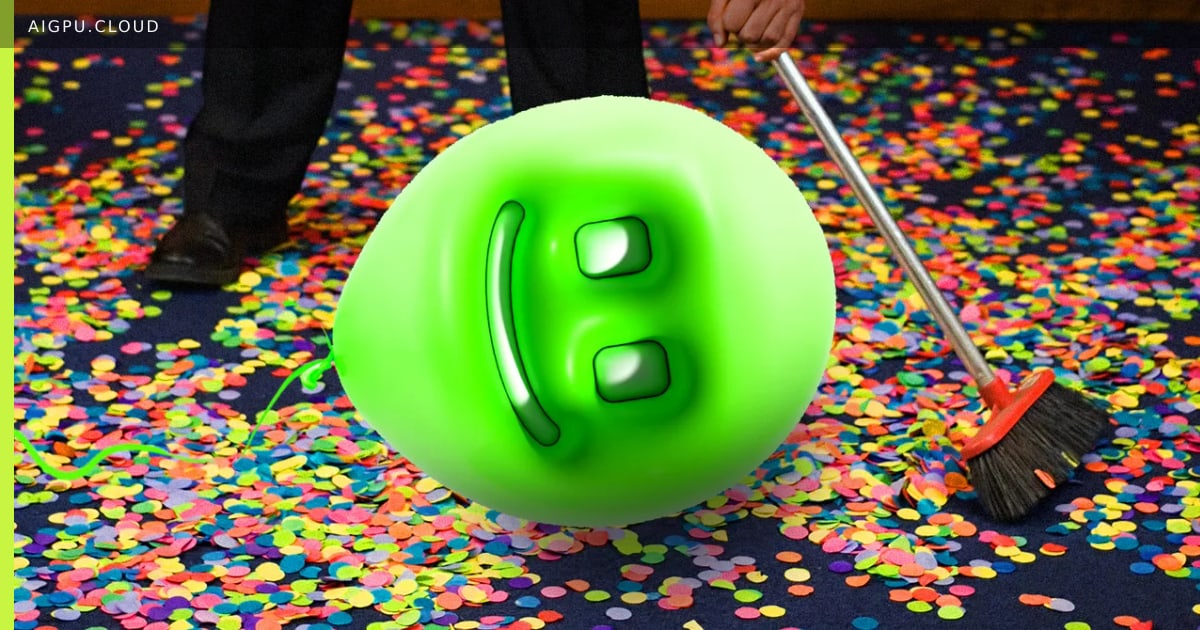
In January 2024, Macmillan Publishers rolled out NOA — short for "No Ordinary Assistant" — with balloons, doughnuts, and light-up marquee letters at its Lower Manhattan headquarters. The chatbot, built by German vendor Chaptr (backed by Macmillan's parent Holtzbrinck), was pitched as a closed-loop enterprise tool that could safely ingest proprietary manuscripts and internal data without third-party leakage.
Staff quickly discovered the gap between launch fanfare and daily utility. Multiple employees described NOA as prone to hallucination, tone-deaf in its adjustable personas ("sarcastic," "regretful," "pessimistic"), and ultimately unused. One editor called it "terrible." By October 2025, Macmillan sunset the product and shifted toward Google Gemini — only to find Gemini's evaluations of agent submission letters "useless," according to an editor.
Why it matters for GPU / AI infrastructure
The NOA episode underscores a recurring pattern: enterprises procure or build LLM-powered tools without first validating model quality, retrieval accuracy, and workflow integration on representative workloads. For infrastructure buyers, this means GPU capacity planning must be coupled with rigorous offline evaluation — latency, throughput, and cost per useful token — before committing cluster spend. A closed-loop deployment on dedicated hardware still fails if the underlying model cannot meet domain-specific quality bars.
Macmillan's pivot to a general-purpose API (Gemini) also illustrates the hidden cost of vendor lock-in versus self-hosted control. Teams running their own model-serving stack on owned or leased GPUs retain data sovereignty and can iterate on fine-tunes, guardrails, and evaluation sets — critical for publishing workflows where factual fidelity and author trust are non-negotiable.
- aigpu
- ai gpu
- ai gpu cloud
- aigpu dubai
- enterprise ai
- llm infrastructure
- gpu cloud
- model evaluation
By AiGpu Editorial · Editorial rewrite based on public reporting (Wired AI)
← All articles