Hardware·
Local AI Adoption: Hardware Demands and Privacy Gains Drive Engineer Interest
Running large language models locally offers data privacy but demands massive unified memory — 256GB on Apple's M5 Ultra Mac Studio enables 125B-parameter models like Qwen 3.8 Flash Next, while self-hosted agents such as Hermes simplify deployment across macOS, Windows, and Linux.
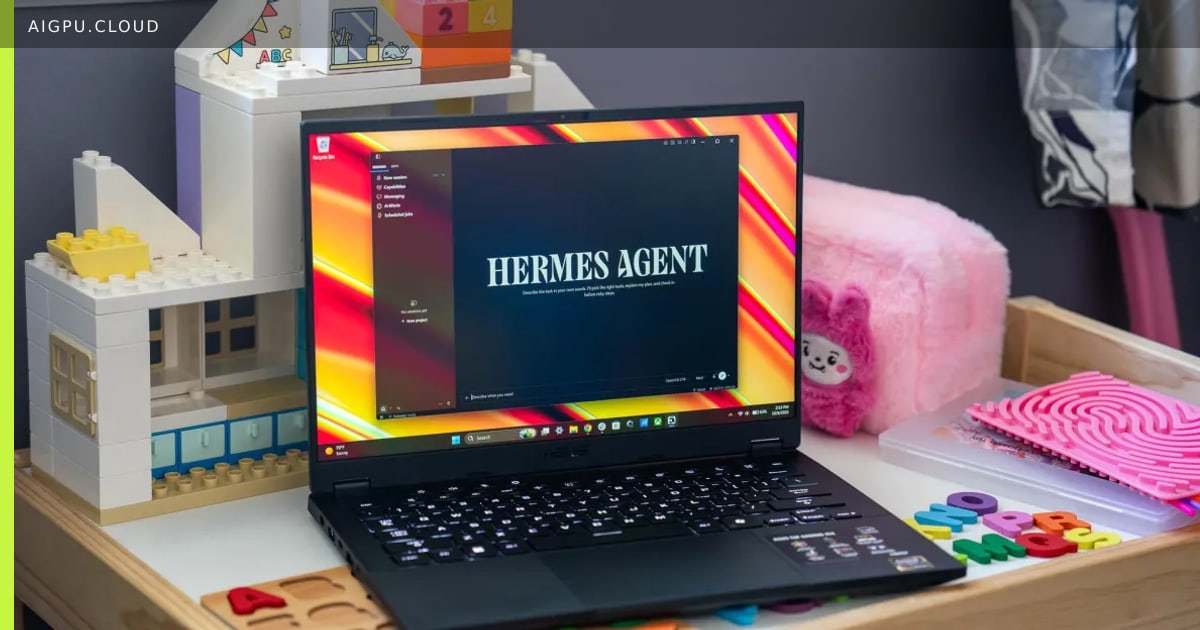
Engineers and AI practitioners are increasingly evaluating local large language model deployment as a privacy-preserving alternative to cloud APIs. The trade-off is steep hardware requirements: a 125-billion-parameter model such as Qwen 3.8 Flash Next occupies roughly 105GB, pushing unified memory needs well beyond standard workstation configurations.
Why it matters for GPU and AI infrastructure
Unified memory architectures — exemplified by Apple's M5 Ultra with 256GB — eliminate the CPU-GPU data transfer bottleneck that constrains discrete GPU systems. This architecture lets a single machine serve inference for models that would otherwise require multi-GPU clusters, reducing both capital expenditure and operational complexity for teams prioritizing data sovereignty.
Self-hosted agent frameworks like Hermes abstract model management across macOS, Windows, and Linux, lowering the barrier to experimentation. However, the sheer volume of available open-weight models creates decision fatigue; parameter count correlates with capability, but quantization techniques and specialized fine-tunes complicate selection.
Cross-platform validation on devices ranging from Mac Mini to RTX Spark-class Windows machines will clarify the price-performance frontier for local inference. For organizations weighing cloud subscription costs against on-premise hardware investment, these real-world benchmarks are essential.
- aigpu
- ai gpu
- ai gpu cloud
- aigpu dubai
- local ai
- llm inference
- unified memory
- mac studio
By AiGpu Editorial · Editorial rewrite based on public reporting (The Verge AI)
← All articles