Research·
Can LLMs Reliably Judge Research Novelty? New Benchmark Reveals Gaps
A new study from Ai2 introduces a benchmark that tests how consistently large language models can assess the novelty of scientific ideas. Results show that small prompt changes cause large swings in judgment accuracy, highlighting the need for more robust evaluation methods.
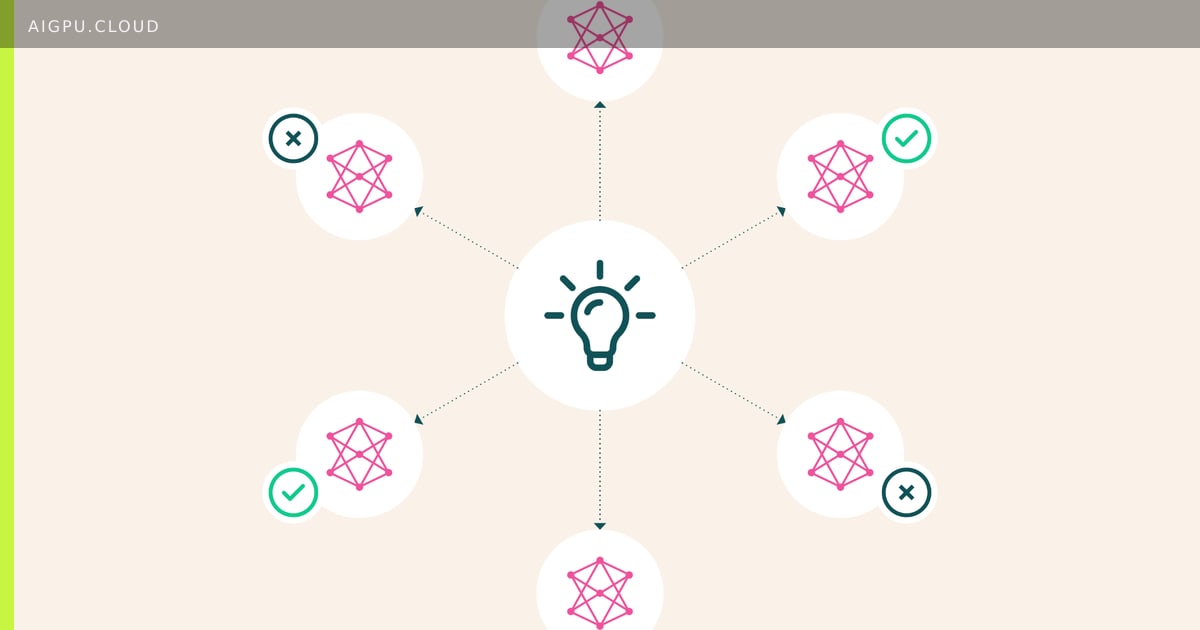
Researchers at Ai2 have released Old Ideas, Novel Problems, a benchmark that measures how well LLMs can decide whether a research proposal contributes something genuinely new. The benchmark is built from ICLR 2026 peer reviews, extracting only those passages where reviewers explicitly discuss originality.
Benchmark Design
An automated pipeline mined reviewer comments to create a high‑novelty set of 154 human‑authored ideas and a low‑novelty set of comparable size. Six state‑of‑the‑art models — including GPT‑5.1, GPT‑5.2, GPT‑5.4, Claude Sonnet 4.5, Claude Opus 4.5, and Claude Opus 4.6 — were then asked to rank pairs of ideas by novelty.
- Changing a few words in the prompt shifted accuracy by more than 50 percentage points.
- Adding retrieval or extra reasoning steps did not consistently improve results.
- Two purpose‑built novelty evaluators performed worse than a simple prompted Claude Opus 4.6 baseline.
Why it matters for GPU / AI infrastructure: Automated scientific discovery pipelines — such as hypothesis generation, literature synthesis, and experiment planning — run on large GPU clusters. If the novelty filter is unreliable, compute resources may be wasted on redundant ideas, reducing the return on investment for AI‑driven research platforms like those offered by AiGpu.
- aigpu
- ai gpu
- ai gpu cloud
- aigpu dubai
- llm
- novelty
- benchmark
- research
By AiGpu Editorial · Editorial rewrite based on public reporting (Hugging Face Blog)
← All articles