Industry·
Kevin Roose Goes All-In on AGI: What the Frontier Lab Race Means for Compute Infrastructure
Veteran tech journalist Kevin Roose leaves The New York Times to launch Machine Gods and publish The AGI Chronicles, a reported deep-dive into the labs racing toward artificial general intelligence. His move signals a broader shift: the AGI narrative is moving from speculation to infrastructure reality.
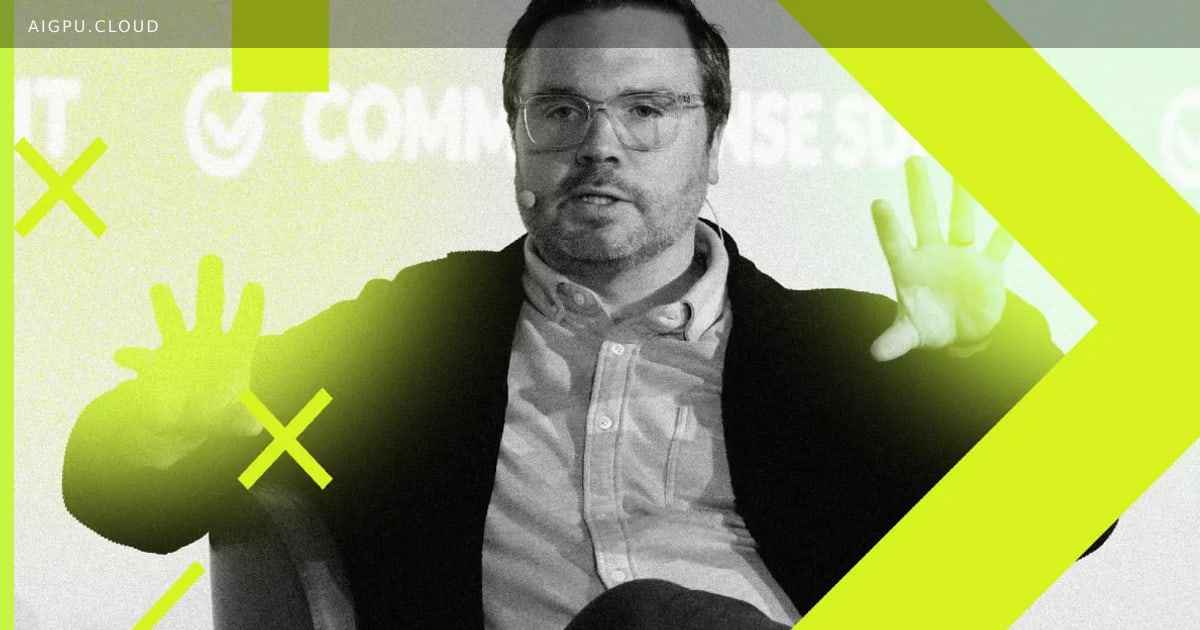
Kevin Roose’s departure from The New York Times to co-found the independent podcast Machine Gods and publish The AGI Chronicles is more than a media career pivot. It reflects how the conversation around artificial general intelligence has migrated from research papers into boardrooms and data-center procurement cycles. Roose’s reporting maps the cultural and commercial transformation inside OpenAI, Anthropic, Google DeepMind, and other frontier labs as they shift from pure research to productized models that demand unprecedented compute scale.
Why the AGI race rewrites infrastructure planning
The book details how each lab’s roadmap now hinges on securing massive GPU clusters, high-bandwidth interconnects, and sustainable power envelopes. Training runs for frontier models routinely consume tens of thousands of accelerators for weeks, while inference deployments require low-latency, multi-region capacity. For infrastructure teams, this means capacity planning can no longer rely on historical growth curves; it must anticipate step-function jumps tied to model-architecture breakthroughs and lab-specific release cadences.
Roose’s access to lab leaders reveals a shared assumption: the next 18–24 months will see multiple "GPT-5 class" training runs, each pushing hardware utilization and networking topologies beyond current best practices. That expectation directly drives demand for liquid-cooled racks, 800 GbE/1.6 TbE fabrics, and flexible consumption models that let labs burst into cloud capacity when on-prem clusters hit thermal or power limits.
Equally telling is Roose’s own shift to creator-owned distribution. Independent technical media now sit closer to the engineering teams making procurement decisions than legacy outlets do. For GPU cloud providers, engaging with these new voices — podcasts, newsletters, Discord communities — surfaces real-time signal on which architectures are hitting bottlenecks, which kernels need optimization, and where the next capacity crunch will appear.
Why it matters for GPU / AI infrastructure: The AGI narrative is no longer abstract; it is a workload forecast. Understanding how frontier labs think about scaling, reliability, and cost-per-token lets infrastructure providers align capacity investments, cooling strategies, and service-level agreements with the actual trajectory of model development.
- aigpu
- ai gpu
- ai gpu cloud
- aigpu dubai
- agi
- ai infrastructure
- gpu cloud
- frontier labs
By AiGpu Editorial · Editorial rewrite based on public reporting (The Verge AI)
← All articles