Industry·
Google Launches Polar Peaks AI Quest to Teach Brain Mapping with Responsible AI
Google Research and Stanford Accelerator for Learning introduce Polar Peaks, an interactive AI Quest where students ages 11–14 map neurons, clean data, and test models — highlighting the critical role of human oversight in AI-driven neuroscience.
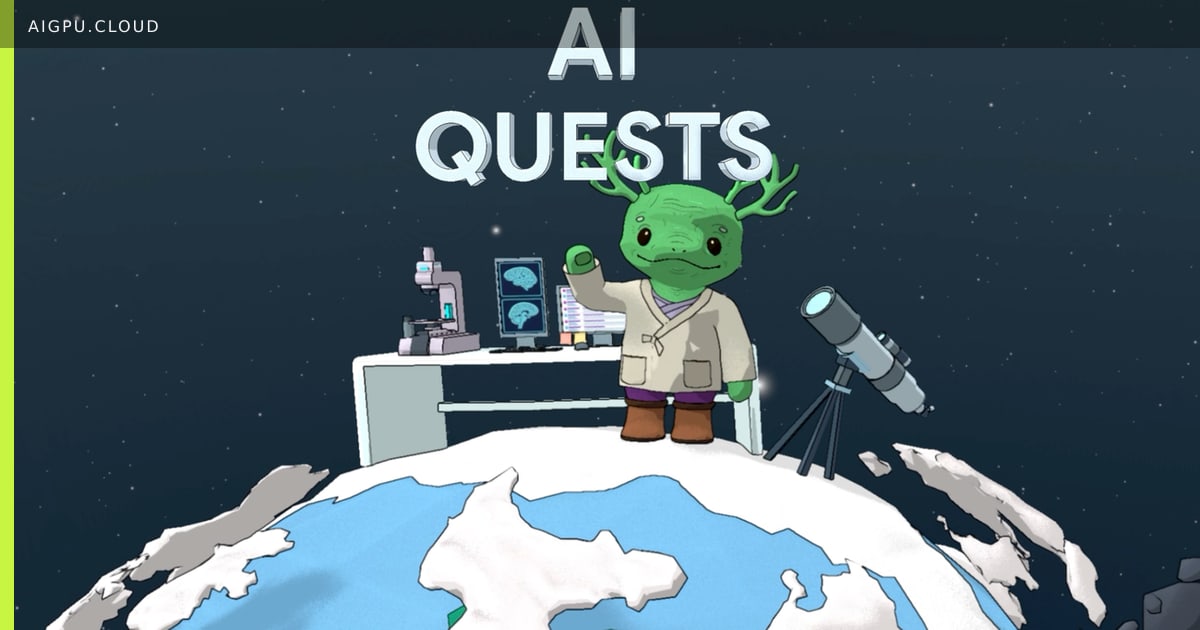
Google Research has unveiled Polar Peaks, the third installment in its AI Quests series, developed with the Stanford Accelerator for Learning. The interactive experience places students aged 11 to 14 in the role of researchers mapping neural connections to solve a fictional memory-loss mystery. Along the way, learners practice data cleaning, model testing, and the essential principle that AI systems require careful human oversight.
Why it matters for GPU / AI infrastructure
The quest draws on more than a decade of connectomics research — the large-scale mapping of brain wiring — which depends on massive compute clusters and high-throughput GPU pipelines. As educational programs like Polar Peaks scale to hundreds of thousands of users across ten languages, they cultivate a pipeline of talent that will eventually drive demand for accessible GPU cloud resources to run their own neuroscience models.
Accompanying the launch, Google released teacher training modules through its AI Educator Series, lowering the barrier for classrooms to integrate real-world AI workflows. Over 400,000 quests have been completed to date, signaling strong global appetite for hands-on AI literacy.
For infrastructure providers, this trend underscores a growing need for flexible, education-friendly GPU environments that support both teaching workloads and the next generation of connectomics research.
- aigpu
- ai gpu
- ai gpu cloud
- aigpu dubai
- ai education
- neuroscience
- gpu cloud
- connectomics
By AiGpu Editorial · Editorial rewrite based on public reporting (Google AI Blog)
← All articles