Infrastructure·
Google Projects 1,600 Starship Launches Required for Orbital Data Centers
Google’s Project Suncatcher has sent a Tensor Processing Unit to orbit, and a new white paper estimates that SpaceX’s Starship must fly roughly 1,600 times to make large‑scale space data centers economically viable.
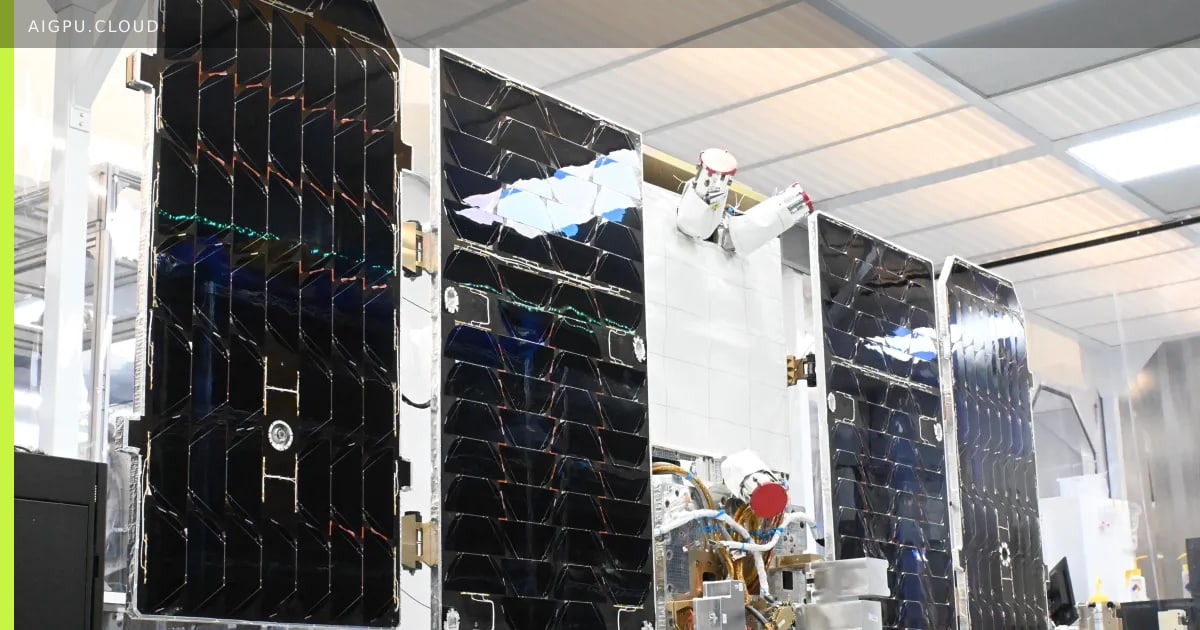
Google’s Project Suncatcher lifted a Tensor Processing Unit into low‑Earth orbit aboard a SpaceX Falcon 9, marking the first in‑orbit test of the company’s custom AI accelerator.
The satellite, built on a Planet Labs platform, will run the TPU in 15‑minute bursts to validate power delivery, thermal control, and model inference under real space conditions.
A peer‑reviewed white paper released the same day projects that achieving cost‑effective orbital data centers will require Starship to complete roughly 1,600 flights, delivering 370,000 tons of payload by 2035 at an estimated $200 per kilogram.
Why it matters for GPU/AI infrastructure
Orbital compute could offload latency‑sensitive training and inference from terrestrial GPU clusters, but only if launch economics and inter‑satellite links mature. The Starship launch cadence becomes a direct gating factor for the next generation of AI infrastructure.
- aigpu
- ai gpu
- ai gpu cloud
- aigpu dubai
- space data centers
- orbital compute
- google tpu
- starship
By AiGpu Editorial · Editorial rewrite based on public reporting (TechCrunch AI)
← All articles