Industry·
Google Unleashes Gemini as Autonomous Task Agent Across Six Countries
Gemini now books appointments, pays bills, and shops for groceries — free for hundreds of millions. The rollout signals rising inference demand for agentic AI workloads.
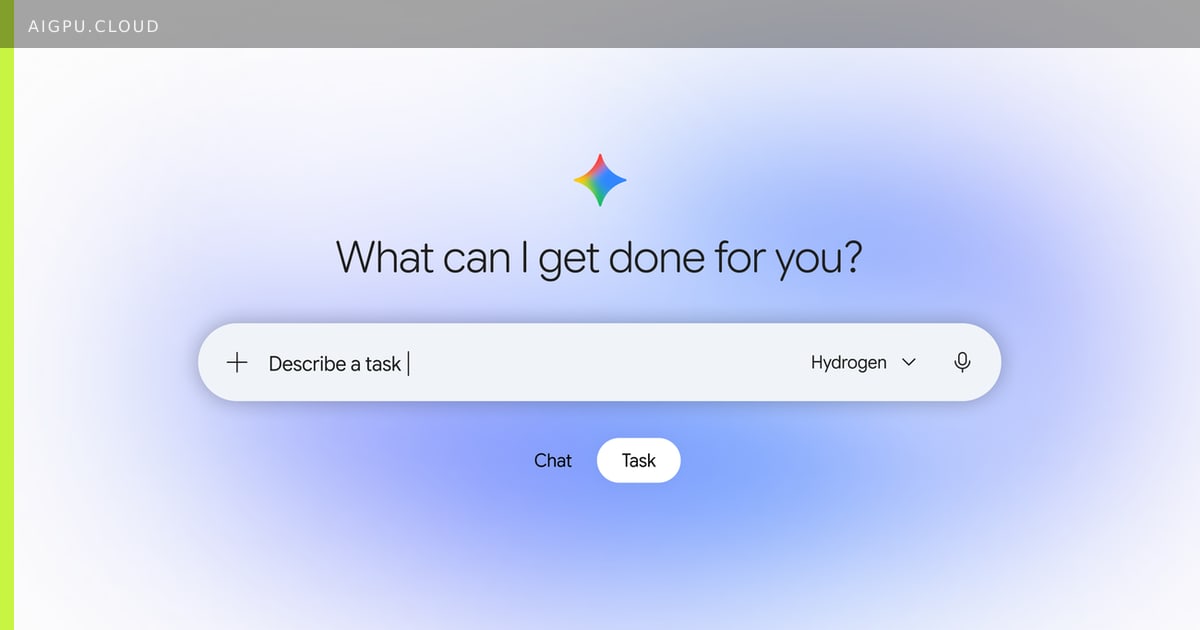
Google has promoted Gemini from chatbot to autonomous agent. Starting 17 November, users in the United States, Japan, Korea, Canada, Australia, and India can flip a toggle in the Gemini app — or simply text or forward mail to [email protected] — and hand off multi-step chores such as calling dealerships for a Friday service slot, parsing utility bills, or completing a grocery order. The feature runs on a new model family dubbed Gemini 4 Hydrogen and executes inside hardware-isolated virtual machines that keep credentials and personal data inside Google's own infrastructure.
Why it matters for GPU / AI infrastructure
Agentic workflows replace single-turn prompts with long-running, tool-using sessions that invoke search, telephony, payment APIs, and calendar writes. Each step spins up additional inference cycles, driving sustained GPU utilisation rather than bursty chat traffic. Cloud providers that offer low-latency, high-throughput inference clusters — especially those with tight integration to identity, billing, and telephony stacks — will capture the backend demand as millions of users delegate daily logistics to AI.
Google's decision to launch free at massive scale accelerates adoption curves and sets a new baseline for consumer expectations. Competing assistants will need comparable tool-use breadth and security guarantees, which in turn requires more sophisticated model serving stacks, tighter data-governance controls, and predictable per-task economics — all areas where specialised GPU clouds can differentiate.
- aigpu
- ai gpu
- ai gpu cloud
- aigpu dubai
- gemini
- agentic ai
- inference infrastructure
- google ai
By AiGpu Editorial · Editorial rewrite based on public reporting (Google AI Blog)
← All articles