Research·
Why Fundamental Math Still Matters in the Age of AI
MIT professor John Urschel argues that mastering core mathematics remains essential even as AI tools become more powerful, highlighting the role of struggle and human insight in developing the quantitative skills that drive modern GPU‑accelerated research.
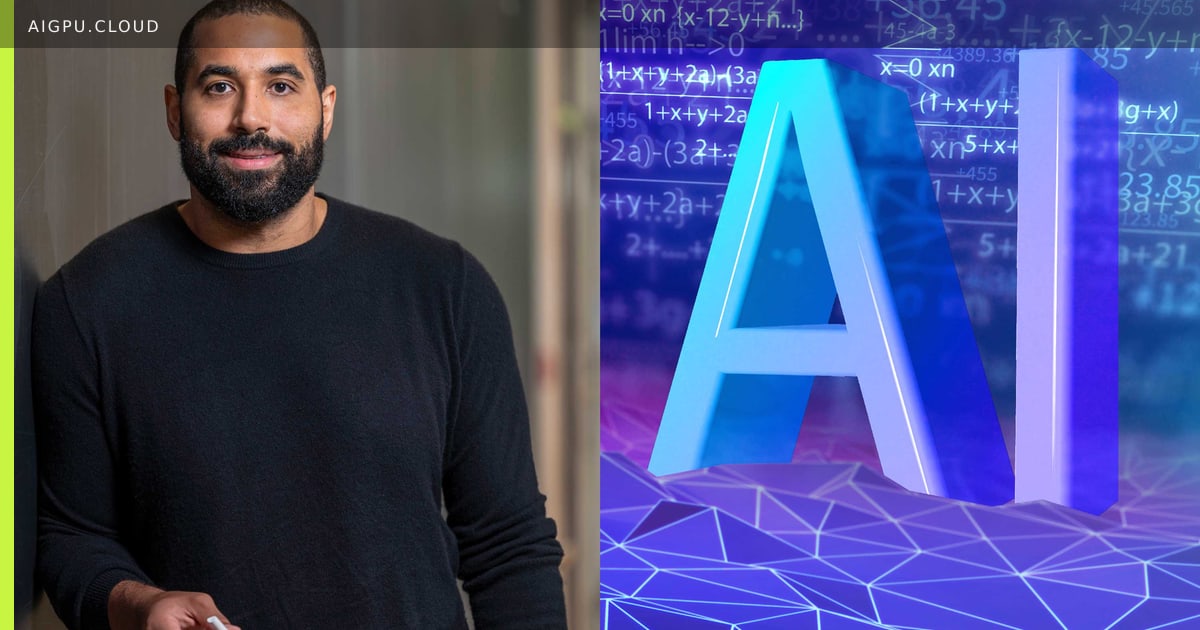
Assistant Professor John Urschel, a former NFL lineman turned mathematician, tells MIT News that the joy of wrestling with a problem — whether a Sudoku or a decades‑old matrix conjecture — builds the critical thinking muscles that no algorithm can replace.
In two recent arXiv preprints, Urschel combined human intuition with AI‑assisted computation to crack long‑standing questions about random matrix growth factors and Gaussian elimination worst cases. The experience showed him that AI accelerates exploration, but the direction and validation still require deep mathematical fluency.
Urschel stresses that residential, in‑person education forces students to struggle, collaborate, and internalize concepts — a process that pure prompt‑based learning cannot replicate.
Why it matters for GPU and AI infrastructure
Training and deploying large models on GPU clusters demands engineers who can design stable numerical algorithms, diagnose convergence failures, and optimize memory‑bound kernels. Those capabilities stem from a solid grasp of linear algebra, probability, and numerical analysis — the very foundations Urschel champions.
As AI hardware scales, the bottleneck shifts from raw compute to the quality of the mathematical thinking that guides it. Investing in fundamental math education today ensures a workforce capable of pushing the next generation of AI GPU platforms forward.
- aigpu
- ai gpu
- ai gpu cloud
- aigpu dubai
- mathematics
- education
- ai research
By AiGpu Editorial · Editorial rewrite based on public reporting (MIT News AI)
← All articles