Industry·
Figma Expands AI Agent Tooling with Specs, Code Layers, and Payload CMS Integration
At its Config India event, Figma launched a Markdown-based design specification editor, promoted code layers to public beta, and integrated the Payload headless CMS — giving AI agents structured context to generate on-brand designs and production-ready code.
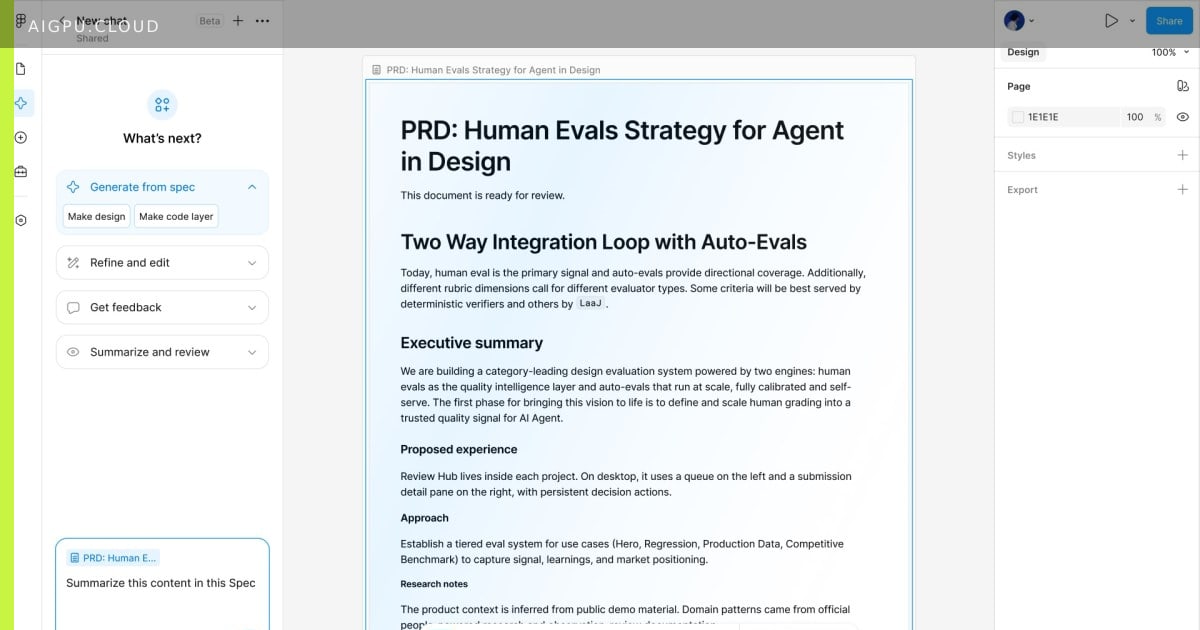
Figma used its first Config conference in India to roll out a trio of capabilities aimed at making AI agents reliable collaborators in the design-to-code pipeline. The centerpiece is Figma Specs, a Markdown-native editor that lets teams codify design tokens, component rules, and brand guidelines in a single source of truth. Because Specs can live on the canvas or as standalone files, both human designers and automated agents reference the same living document — reducing the drift that typically plagues generative workflows.
Complementing Specs, code layers graduated from private to public beta. The feature embeds editable code snippets directly on the canvas, so an agent can turn a static mockup into an interactive React or HTML prototype, then iterate on the implementation without leaving Figma. Early adopters report cutting hand-off cycles by up to 40 percent, a metric that matters when every iteration consumes GPU cycles.
On the content side, Figma deepened its Payload CMS integration inside Figma Make, the company’s AI site generator. Payload’s sixfold download growth over the past year signals rising demand for headless content pipelines that feed dynamic, AI-authored experiences. By managing content and layout in one loop, teams avoid the round-trips that inflate inference costs.
Why it matters for GPU / AI infrastructure
Design platforms are becoming front-end IDEs for generative AI. Each agent call — spec lookup, code generation, content fetch — triggers model inference. As enterprises standardize on tools like Specs and code layers, predictable, high-throughput GPU capacity becomes a line-item requirement, not an afterthought. AiGpu’s on-demand clusters are sized for exactly this bursty, multi-tenant workload pattern.
- aigpu
- ai gpu
- ai gpu cloud
- aigpu dubai
- figma
- ai agents
- design systems
- gpu infrastructure
By AiGpu Editorial · Editorial rewrite based on public reporting (TechCrunch AI)
← All articles