Industry·
OpenAI Adds a Wallet to ChatGPT So Its Agents Can Complete Purchases
OpenAI has launched a ChatGPT Wallet that lets its 'dots' agents research products and check out on a user's behalf, starting with a small group of US Pro subscribers. The design leans on payment tokens and biometric approval rather than handing card details to the agent.
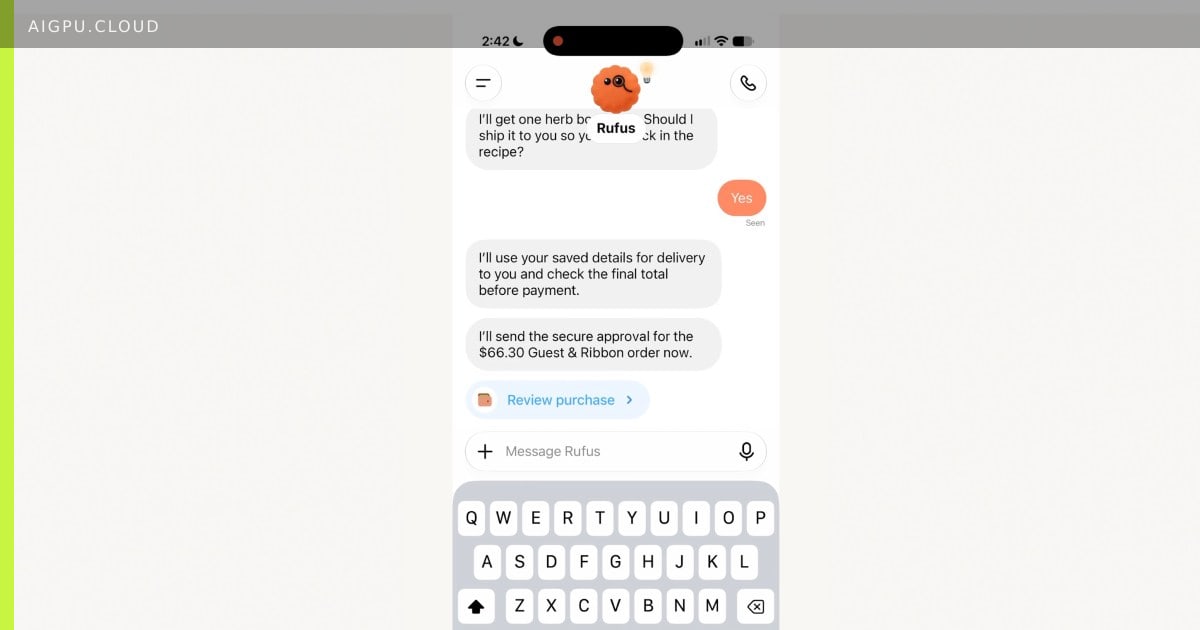
OpenAI has introduced a wallet inside ChatGPT that allows its shopping agents, known as dots, to move from product research to an actual checkout. The rollout is deliberately narrow at first: a limited set of US ChatGPT Pro subscribers, aged 18 and over, holding a US-issued Visa, Mastercard or American Express card.
The control model is the interesting part. Before any transaction completes, the user reviews the item, the total and the card that will be charged, then confirms with a biometric check such as Face ID or a fingerprint. That confirmation also produces a transaction record. Card details are never exposed to the agent or the merchant; the wallet charges a payment token instead, and the merchant receives fulfilment data such as shipping address and contact details from the dot.
Why it matters for GPU / AI infrastructure
Agentic commerce turns a chat session into a workflow with real-world side effects, and that changes the infrastructure bill. Every purchase step — product search, comparison, policy checks, fraud screening, confirmation — is an inference call, often several per transaction and frequently multimodal. Latency budgets tighten because a human is waiting to approve a checkout, and reliability requirements rise because a failed call means a failed sale. For teams building agent platforms, this argues for predictable GPU capacity close to the user rather than burst-only economics.
OpenAI says users keep their card rewards and dispute protections, and that later releases will add spending limits and category or time-based pre-approvals so agents can act with more autonomy. Broader retailer support is also planned, though agent-blocking remains a hurdle — Amazon is the most prominent retailer currently refusing automated agents in favour of its own assistant. OpenAI has published a Commerce Partner Playbook to help merchants adapt.
For infrastructure buyers, the signal is that consumer AI is shifting from answering questions to executing tasks. That shift pulls compute toward always-on, low-latency inference with strong audit trails, and it makes capacity planning a commercial question rather than a purely technical one.
- aigpu
- ai gpu
- ai gpu cloud
- aigpu dubai
- agentic commerce
- openai
- inference
- gpu infrastructure
By AiGpu Editorial · Editorial rewrite based on public reporting (TechCrunch AI)
← All articles