Hardware·
Can AI Keep Scaling? Cerebras CEO Andrew Feldman on the Future of Compute
At TechCrunch Disrupt 2026, Cerebras CEO Andrew Feldman discusses whether AI can continue scaling given compute, energy, and infrastructure limits, and how wafer‑scale chips and massive data‑center build‑outs aim to push those boundaries.
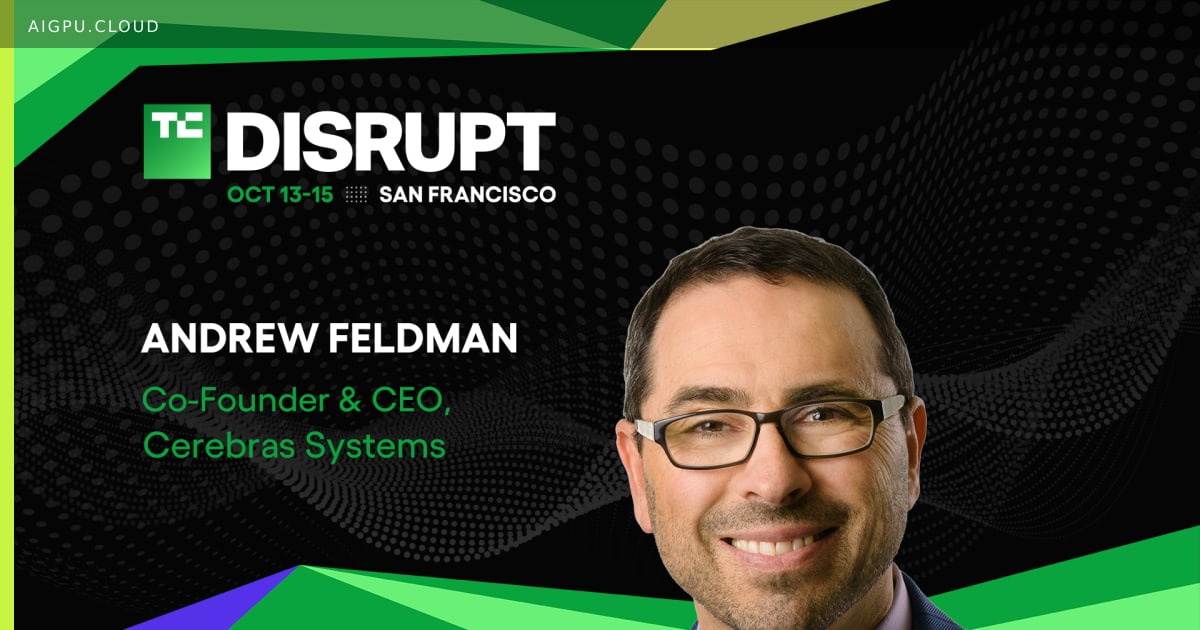
Andrew Feldman, co‑founder and CEO of Cerebras Systems, will take the stage at TechCrunch Disrupt 2026 to address a question that looms over every AI roadmap: can the current trajectory of model growth be sustained?
Cerebras has spent the last decade proving that wafer‑scale processors can deliver the raw throughput that conventional GPU clusters struggle to match. The company’s latest CS‑4 system, coupled with a multiyear agreement to supply 750 megawatts of compute to OpenAI, signals a shift from experimental silicon to production‑grade infrastructure.
Scaling AI Means Scaling Infrastructure
Feldman argues that faster chips alone are insufficient. Supporting the next generation of models requires coordinated expansion of data‑center capacity, power delivery, cooling, and manufacturing. Cerebras reports more than 600 megawatts of capacity live or under contract for 2027 and a tenfold increase in fab throughput this year, with the first European site slated to come online in 2026.
For engineers and procurement leaders, the talk will frame the practical limits of today’s hardware and outline where alternative architectures — like wafer‑scale — can relieve bottlenecks. Understanding these constraints is essential when planning GPU‑cloud budgets or on‑premise AI deployments.
- aigpu
- ai gpu
- ai gpu cloud
- aigpu dubai
- cerebras
- wafer-scale
- ai infrastructure
- scaling
By AiGpu Editorial · Editorial rewrite based on public reporting (TechCrunch AI)
← All articles