Industry·
Apple HomeView Arrives: Siri AI Takes Up Residence on the Kitchen Counter
Apple's first smart display blends a 7-inch touchscreen with a compact speaker base, putting on-device Siri AI and Matter smart-home control at the center of the home — without sacrificing privacy.
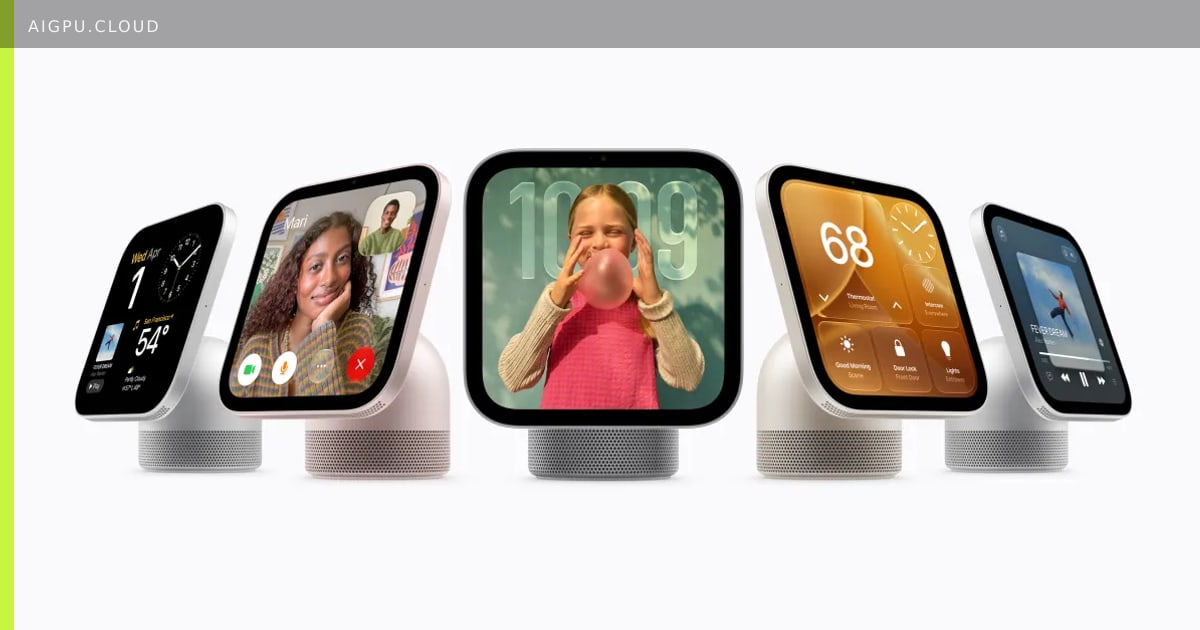
Apple has finally unveiled the HomeView, its long-anticipated smart display that plants a vibrant 7-inch square screen atop a minimal aluminum speaker base. Priced at $299 and shipping November 13 across eight markets, the device is less a tablet on a stand and more a purpose-built ambient computer — think oversized Apple Watch rather than shrunken iPad. Its adjustable stainless-steel arm lets it perch on a kitchen counter or bedside table, while the absence of physical buttons and a camera cover underscores a design philosophy that favors gesture and voice over tactile controls.
Siri AI with a privacy gatekeeper
The headline feature is Siri AI, now capable of natural-language queries, smart-home orchestration, and personal-context awareness drawn from messages, calendar, and email. Crucially, that personal layer only unlocks when Face ID recognizes the user and an Apple Intelligence-capable iPhone sits on the same Wi-Fi network — a clever edge-compute partition that keeps sensitive data off the display itself. For GPU-watchers, this signals a growing trend: inference split between a powerful pocket device and a lean edge endpoint, reducing the need for heavy on-board silicon while preserving responsiveness.
As a Matter controller and Thread border router, HomeView becomes the coordination hub for Apple's new Home Collection — cameras, thermostat, and a smart lock — plus existing HomeKit gear. Live HomeKit Secure Video feeds, Center Stage FaceTime calls, and recipe widgets round out the use cases. The modular "faces" system, borrowed from watchOS, lets owners swap photo albums, clocks, Snoopy animations, or app widgets with a swipe.
Why it matters for GPU / AI infrastructure: HomeView exemplifies the "thin edge, thick phone" architecture. By offloading personal-context inference to a nearby iPhone, Apple avoids stuffing a high-wattage NPU into a $299 appliance, yet still delivers low-latency, privacy-first AI. For cloud and edge providers, this pattern reinforces demand for heterogeneous compute: beefy client-side GPUs for training and heavy inference, ultra-efficient edge ASICs for always-on wake-word and sensor fusion, and seamless handoff protocols between them.
- aigpu
- ai gpu
- ai gpu cloud
- aigpu dubai
- apple
- smart-display
- edge-ai
- siri-ai
By AiGpu Editorial · Editorial rewrite based on public reporting (The Verge AI)
← All articles