Hardware·
Amazon Bee Frontier: When AI Wearables Blur Memory and Reality
The Verge's Victoria Song explores how Amazon's always-listening Bee Frontier wearable disrupts personal memory and therapy, raising questions about AI's role in human cognition.
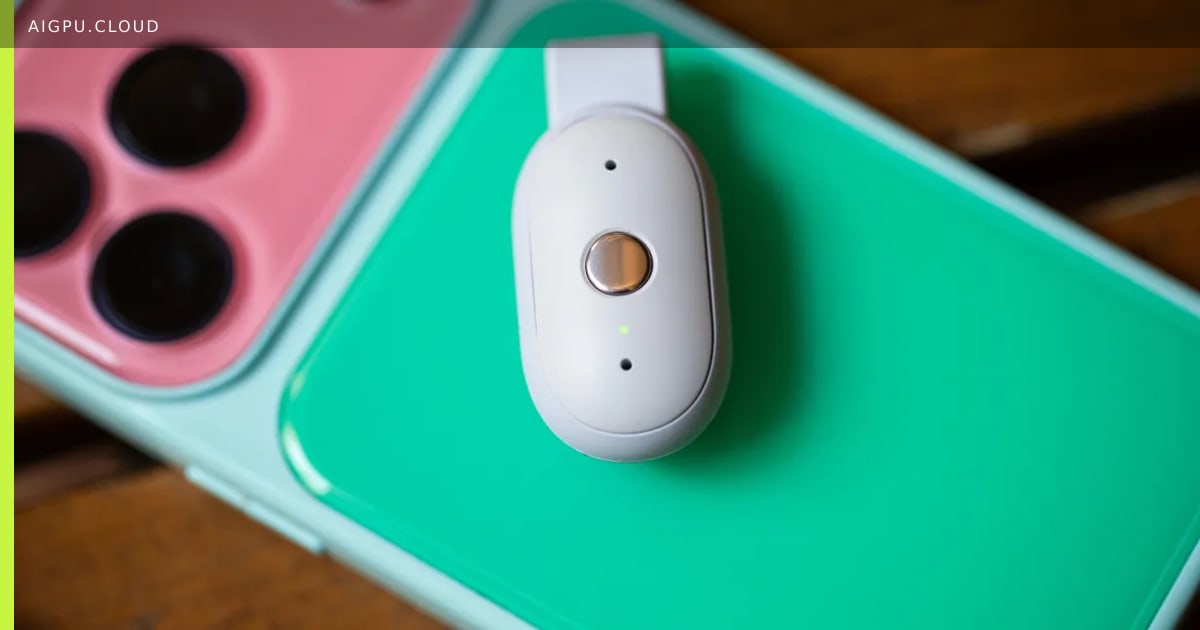
Amazon's Bee Frontier represents a new class of ambient AI wearables that continuously record, transcribe, and summarize conversations. The device promises productivity gains — to‑do extraction, tone analysis, and a personal chatbot — but the author's experience reveals a deeper friction: when an algorithm mediates memory, trust in one's own recollection erodes.
Why it matters for GPU and AI infrastructure
Always‑on listening demands relentless, low‑latency inference. Real‑time speech‑to‑text, speaker diarization, and on‑the‑fly summarization require efficient models running at the edge or in nearby GPU clouds. Scaling this to millions of users means massive parallel compute, optimized model quantization, and privacy‑preserving data pipelines — core challenges for any AI infrastructure provider.
The therapy anecdote underscores a design imperative: systems that augment cognition must prioritize human agency over data capture. Transparent indicators, user‑controlled retention, and offline‑first processing are not optional; they are infrastructure requirements.
As wearables move from fitness tracking to cognitive augmentation, the underlying GPU fabric must evolve from batch‑oriented training clusters to always‑available inference grids with millisecond response times. That shift defines the next frontier for cloud GPU platforms.
- aigpu
- ai gpu
- ai gpu cloud
- aigpu dubai
- ai wearables
- ambient computing
- edge inference
- privacy
By AiGpu Editorial · Editorial rewrite based on public reporting (The Verge AI)
← All articles