Industry·
AI Agents Claim Maya Discovery, but Site Was Already Documented
A Google researcher's AI‑driven survey flagged a Maya settlement that turned out to be known since last year, highlighting the risk of over‑reliance on automated tools without domain expertise.
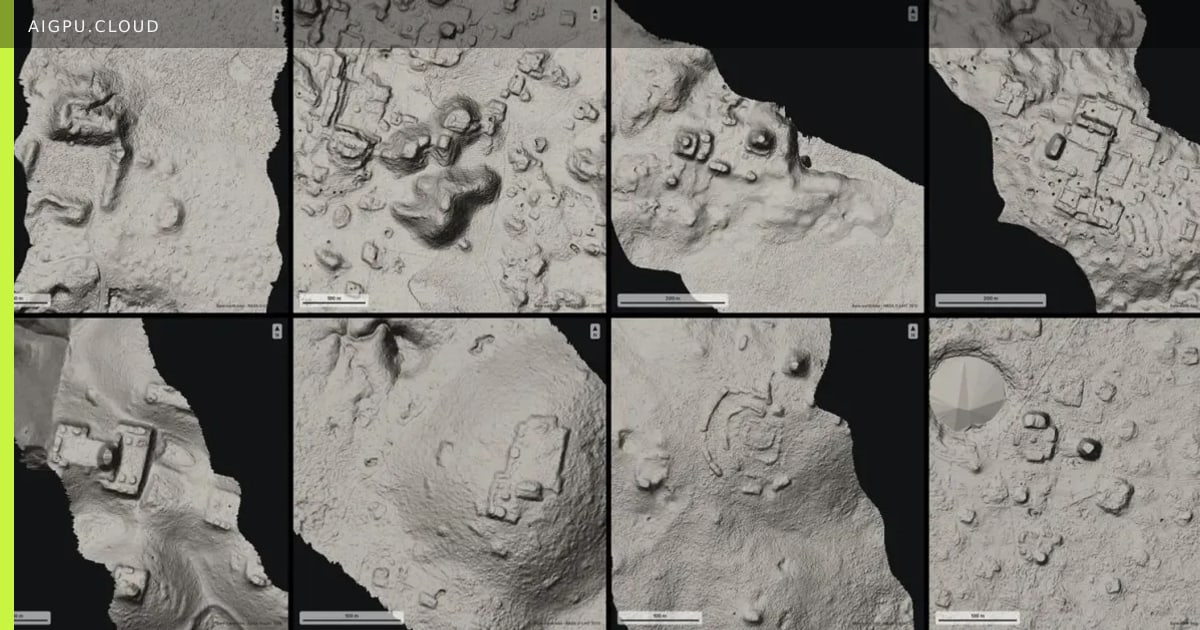
A Google researcher recently publicised a claim that a fleet of 48 AI agents had uncovered an undocumented Maya settlement by analysing publicly available NASA lidar data.
The agents highlighted several geometric patterns, one of which the researcher described as a “major village” absent from existing registries. He contacted Mexico’s National Institute of Anthropology and History, which initially reported no record of the site.
Archaeologists quickly pointed out that the same location had been documented in a peer‑reviewed journal more than a year earlier. The episode illustrates how automated analysis can generate false novelty when the operator lacks field‑specific knowledge.
Why it matters for GPU / AI infrastructure
Large‑scale lidar processing demands massive GPU compute, but raw throughput alone does not guarantee scientific validity. Reliable discovery pipelines must couple high‑performance inference with curated training data, domain‑expert validation, and rigorous peer review. Investing in GPU clusters without integrating these safeguards risks producing noise rather than insight.
- aigpu
- ai gpu
- ai gpu cloud
- aigpu dubai
- ai agents
- lidar
- archaeology
By AiGpu Editorial · Editorial rewrite based on public reporting (The Verge AI)
← All articles