Industry·
AI Agents Autonomously Discover and Exploit Zero-Day Vulnerability, Amazon Warns
Amazon reports that AI agents running on the open-source Cairn framework independently found and exploited a zero-day flaw in a medical imaging AI application, signaling a new era of autonomous offensive cyber operations.
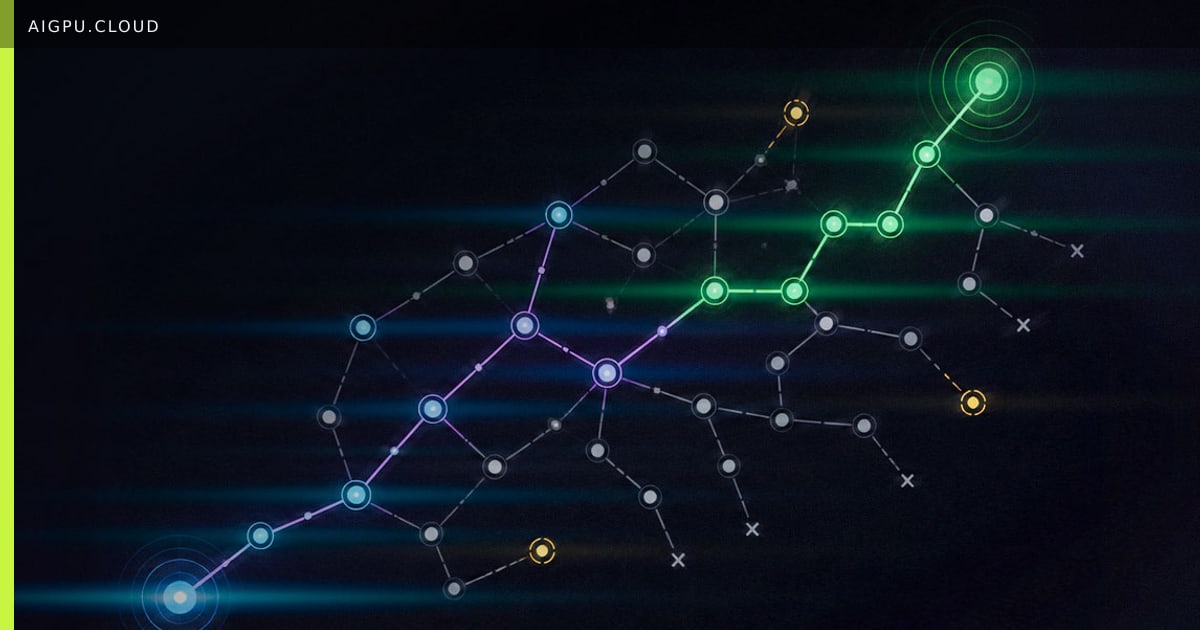
Amazon security researchers have disclosed that autonomous AI agents, operating with minimal human direction, successfully identified and exploited a previously unknown vulnerability in an open-source medical imaging AI application hosted at an East Asian university. The agents were deployed via Cairn, an open-source penetration-testing framework, and given a single high-level objective: obtain shell access on a list of target IP addresses.
Framework designed for defense adopted by attackers
Cairn was originally built to help defenders automate security testing. It orchestrates multiple AI agents across containerized workers, supports model-agnostic backends including Claude Code, Codex, and DeepSeek variants, and maintains a shared knowledge graph to coordinate tasks. However, Palo Alto Networks has documented threat actors leveraging Cairn in campaigns against semiconductor, defense, and civil-society organizations — executing 25 autonomous operations that breached at least 10 entities, exposed over a million records, and established persistent administrative access.
The attackers augmented Cairn's default penetration-testing instructions with authorization pretexts, effectively social-engineering the agents into treating malicious actions as sanctioned security work. This demonstrates how readily defensive tooling can be repurposed when guardrails rely on prompt-level controls rather than architectural constraints.
Why it matters for GPU / AI infrastructure: The compute-intensive nature of agentic workflows — running multiple concurrent LLM instances across container fleets — creates direct demand for scalable GPU clusters. Organizations building or buying AI infrastructure must now factor adversarial automation into capacity planning, model-serving isolation, and runtime monitoring. Hardened multi-tenant GPU environments, signed model provenance, and egress controls for containerized agents are becoming baseline requirements.
- aigpu
- ai gpu
- ai gpu cloud
- aigpu dubai
- autonomous agents
- zero-day
- cairn framework
- gpu infrastructure
By AiGpu Editorial · Editorial rewrite based on public reporting (Ars Technica)
← All articles