Industry·
Adobe Expands AI Across Creative Cloud and Opens Model Context Protocol
At its MAX conference Adobe unveiled a wave of generative AI upgrades for Photoshop, Premiere, Illustrator, InDesign and Firefly, plus a new Model Context Protocol (MCP) that lets external chatbots tap directly into Creative Cloud tools.
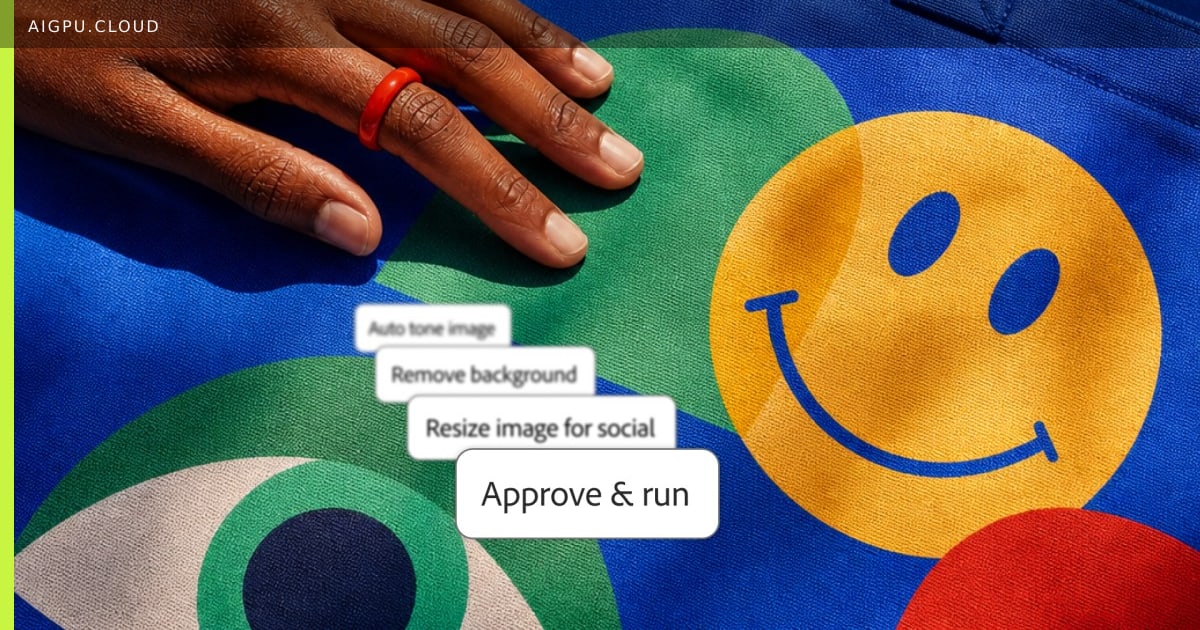
Adobe's MAX event in Miami showcased a broad infusion of generative AI across its flagship creative applications. Photoshop gains a relighting engine and prompt‑driven style sliders, Premiere receives professional color‑grading and object‑removal for video, while Lightroom adds blink‑correction and blemish removal.
Firefly, Adobe's generative platform, moves toward prototyping with a private‑beta Builder tool that competes with Figma, and a new video assembly feature that stitches clips, images and sound effects into finished sequences. On‑brand graph generation and precise region‑level image editing further extend creative control.
Why it matters for GPU / AI infrastructure
The rollout leans heavily on high‑performance GPU clusters for model inference and real‑time rendering. Adobe's expanding model zoo — now including third‑party models from Google, Runway, ElevenLabs, Black Forest Labs, OpenAI, Kling, ByteDance and newly acquired Topaz Labs — drives demand for scalable, low‑latency compute that cloud GPU providers such as AiGpu can satisfy.
Perhaps most significant for developers is the launch of a local Model Context Protocol. MCP exposes endpoints across Illustrator, Photoshop, After Effects and Premiere, allowing chatbots like ChatGPT, Claude or Gemini to invoke Creative Cloud functions directly. Adobe says it will iterate on exposed capabilities based on community feedback, signaling an open, extensible AI workflow layer.
- aigpu
- ai gpu
- ai gpu cloud
- aigpu dubai
- adobe
- creative cloud
- model context protocol
- firefly
By AiGpu Editorial · Editorial rewrite based on public reporting (TechCrunch AI)
← All articles